
 March 20, 2026
 No Comments
によると vs による: How to Use Them Without Mistakes
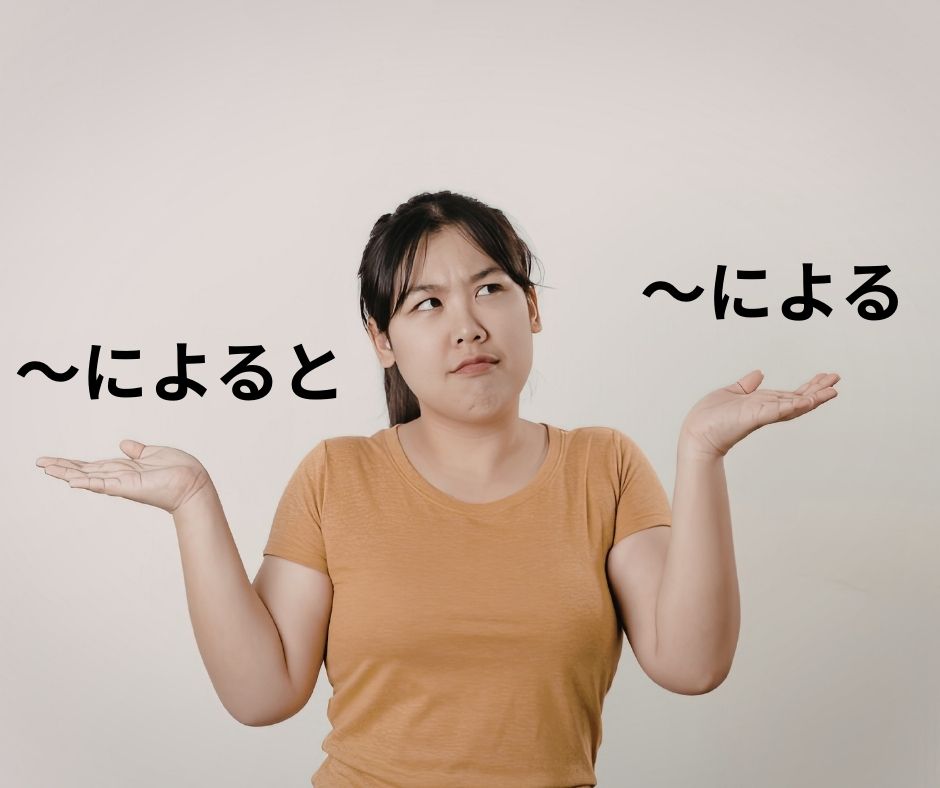
If you’re learning intermediate Japanese, you’ve probably come across both 〜によると and 〜による and wondered, “Wait… aren’t these the same?” 🤔
At first glance, they do look similar. However, their usage is quite different. So, let’s break it down step by step with clear explanations and examples.
🔷 〜によると = “According to…”
First of all, 〜によると is used when reporting information from a source. In other words, it works just like “according to” in English.
👉 Structure:
[Source] によると + sentence
In many cases, it is followed by expressions such as:
- 〜そうです
- 〜とのことです
However, in casual situations, you can also state the information directly.
✅ Examples:
- 天気予報によると、明日は雨だそうです。
→ According to the weather forecast, it will rain tomorrow. - ニュースによると、その会社は倒産しました。
→ According to the news, the company went bankrupt. - 先生によると、この文法はN3レベルです。
→ According to the teacher, this grammar is N3 level.
💡 Key point:
Overall, you are quoting or relaying information from a source.
🔷 〜による = “by / due to / caused by / depending on”
On the other hand, 〜による is more flexible. Specifically, it modifies a noun and expresses relationships such as cause, method, or agent.
👉 Structure:
[Noun] による + noun
1️⃣ Cause (〜による + noun)
To begin with, it can show cause:
- 台風による被害が大きいです。
→ The damage caused by the typhoon is severe. - 事故による渋滞が発生しました。
→ Traffic congestion occurred due to an accident.
2️⃣ Agent (who did it)
In addition, it can indicate the person or entity responsible:
- この本は村上春樹による作品です。
→ This is a work by Haruki Murakami. - この映画は有名な監督によるものです。
→ This movie is by a famous director.
3️⃣ Method / Means
Furthermore, it can describe method or means:
- オンラインによる授業が増えています。
→ Classes conducted online are increasing. - AIによる分析が進んでいます。
→ Analysis using AI is advancing.
4️⃣ Variation (〜によって)
Finally, a closely related form is 〜によって, which often expresses differences or conditions:
- 文化は国によって違います。
→ Culture differs depending on the country. - 状況による。
→ It depends on the situation.
🔥 Quick Comparison
| Grammar | Meaning | Usage |
|---|---|---|
| 〜によると | According to | Reporting information from a source |
| 〜による | By / due to / caused by | Modifies a noun (cause, agent, method) |
🎯 Simple Way to Remember
- 🗣 〜によると → “Someone said…”
- ⚙️ 〜による → “Something caused or created this”
📝 Practice Quiz
Choose the correct answer: 〜によると or 〜による
- 天気予報( )、明日は雪です。
- 地震( )被害が広がっています。
- 先生( )、このテストは難しいそうです。
- この絵は有名な画家( )作品です。
- インターネット( )情報収集が一般的です。
- イベントの開催は参加人数( )。
✅ Answers
- によると
- による
- によると
- による
- による
- による
Now, you should have a much clearer understanding of the difference between these two grammar points. As you keep practicing and creating your own sentences, using them correctly will soon feel natural 👍
If you want to learn Japanese, improve your skills, or connect with native speakers and other learners, we can help. We offer one-on-one lessons, group courses and a supportive community!
Website: nihongonana.com
Email: support@nihongonana.com
✅Private Lesson: NihongoNana Private Lessons
✅Group Courses: NihongoNana Courses
✅Online Community: NihongoNana Community
Recent Posts
-

日本のトイレ – The Unique…
April 13, 2026
-
Are You Confused with…
April 11, 2026
-

ジブリ作品 – Best Studio…
April 10, 2026
-

Japanese Money Terms You…
April 9, 2026
-

ゲームセンター – The Fascinating…
April 8, 2026
Leave Comment