
 December 2, 2025
 No Comments
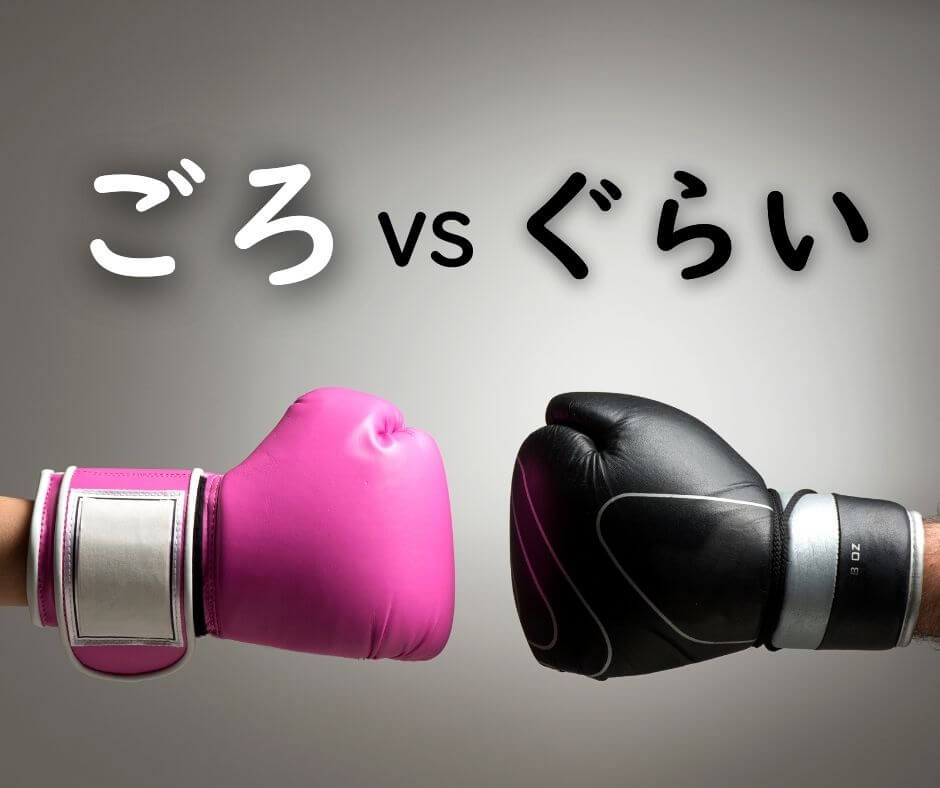
〜ぐらい vs 〜ごろ – How to Express Approximate Amounts or Time
In Japanese, both 〜ぐらい and 〜ごろ mean “about/around,” but they are used in different situations.
Here is a clear guide to help you understand the difference.
1. 〜ぐらい(〜くらい)
Meaning: about / approximately
Used for:
- numbers
- amounts
- quantity
- distance
- price
- duration (how long something takes)
You use ぐらい when answering questions like “How much?” or “How long?”
Examples
- りんごを3個ぐらい食べました。
- → I ate about three apples.
- このバッグは5,000円ぐらいです。
- → This bag costs around 5,000 yen.
- 東京まで2時間ぐらいかかります。
- → It takes about 2 hours to get to Tokyo.
- 日本語を1年ぐらい勉強しています。
- → I’ve been studying Japanese for about one year.
2. 〜ごろ
Meaning: around (a point in time)
Used for:
- clock time (〜時)
- dates
- months
- years
- morning/afternoon
- specific points in time (not duration)
You use ごろ when answering the question “When?”
Do not use ごろ for duration.
Examples
- 6時ごろ起きます。
- → I wake up around 6 o’clock.
- 明日3時ごろ会いましょう。
- → Let’s meet around 3 PM tomorrow.
- 日本には4月ごろ桜が咲きます。
- → Cherry blossoms bloom in Japan around April.
- パーティーは7時ごろからです。
- → The party starts around 7 PM.
3. Quick Comparison
| Usage | ぐらい | ごろ |
|---|---|---|
| Amount / quantity | ✔️ | ✖️ |
| Duration (how long) | ✔️ | ✖️ |
| Specific time (like 5:00) | ✖️ | ✔️ |
| Dates, months, years | ✖️ | ✔️ |
| Meaning | Approximate amount | Approximate point in time |
4. Common Mistakes
❌ 5時間ごろ → Incorrect (duration)
⭕ 5時間ぐらい → Correct
❌ 3キロごろ走りました → Incorrect
⭕ 3キロぐらい走りました → Correct
5. Practice Quiz
Rewrite using 〜ぐらい or 〜ごろ (Type your answers in the comment section).
- The train will arrive around 6 PM.
- I’ll call you around 9 o’clock.
- I slept for about 10 hours.
- Let’s meet around Saturday.
- I studied for about 30 minutes.
- Cherry blossoms bloom around March in my country.
- I walked about 5 kilometers today.
- I usually eat lunch around 12 PM.
- The meeting will start around next Tuesday.
- I waited for about 20 minutes.
Understanding the difference between 〜ぐらい and 〜ごろ will help you sound more natural when talking about amounts and time in Japanese. Once you get used to choosing the right one, everyday conversations become much easier. Keep practicing a little every day, and these expressions will soon feel natural!
If you want to learn Japanese, improve your skills, or connect with native speakers and other learners, we can help. We offer one-on-one lessons, a supportive community, and on demand courses.
Website: nihongonana.com
Email: support@nihongonana.com
✅Book 1-on-1 lessons: https://nihongonana.com/lessons/
✅Join our Speaking Club: https://nihongonana.com/community/
✅Join our Course Waitlist: https://nihongonana.com/courses/
Recent Posts
-

8 Essential Japanese Directions…
September 3, 2026
-

The Surprising World of…
September 2, 2026
-

Natural Disasters in Japan:…
September 1, 2026
-

Practical Japanese House Vocabulary…
August 31, 2026
-

What Is 24-Hour Television?…
August 29, 2026
Leave Comment