
 February 23, 2026
 No Comments
Blue or Green? The Unique World of 青
If you’re learning Japanese, you’ve probably had this moment:
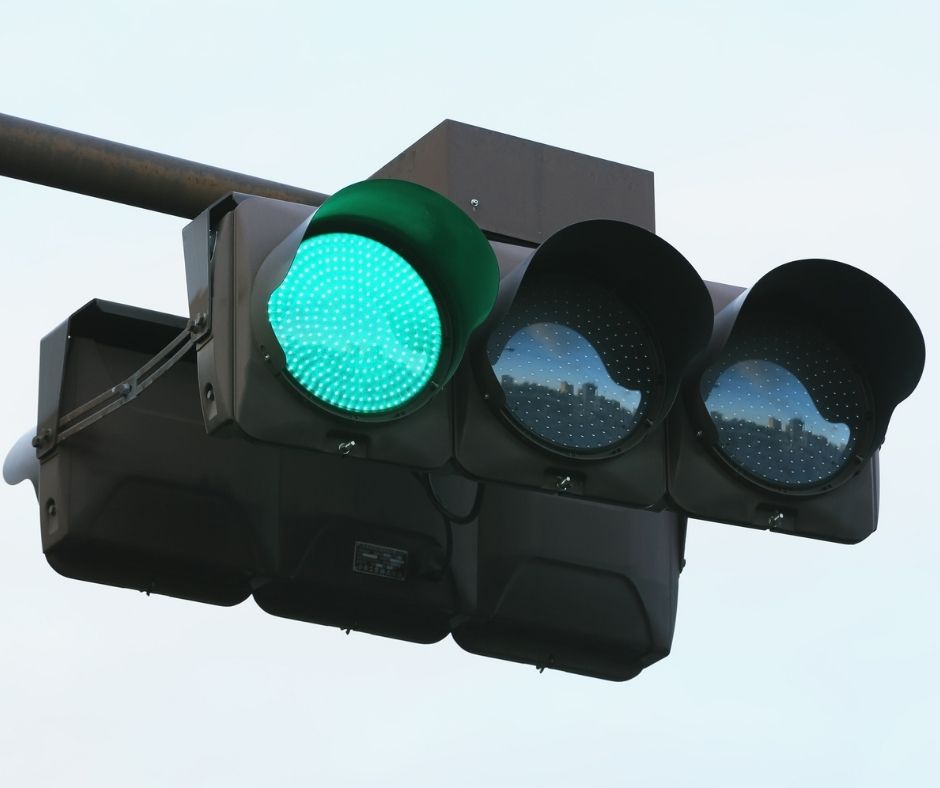
You see a green traffic light 🚦
But someone says: 「青になったよ」 (It turned blue.)
Wait… what?
Why is 青 — which we learn as blue — used for things that are clearly green?
Let’s unpack this beautiful little language mystery.
🌊 1. Historically, 青 Covered Both Blue and Green
In old Japanese, 青 didn’t just mean blue. It described a whole range of cool colors — from blue to green.
So things we’d clearly separate today as:
- blue sky
- green leaves
- green vegetables
were once grouped together as “青”.
Languages don’t divide colors the same way. English splits blue and green very clearly. Traditional Japanese? Not so much.
🌱 2. Midori (緑) Came Later
The word 緑 existed, but for a long time it was considered a shade of 青, not a completely separate color.
Only in more modern Japanese did 緑 become firmly established as “green” in education and daily use.
So in a way, 青 is the “original category,” and 緑 branched off later.
🚦 3. Why Is the Traffic Light Still “Blue”?
Even though the traffic signal is green, people say:
青信号 – blue light
This is a cultural holdover from older language usage.
In fact, Japan once adjusted the shade of green traffic lights to be slightly more bluish — partly to match the word 青. Language influencing design. How cool is that?
🌿 4. “Green” Things Still Called 青
Here are everyday examples where 青 clearly means green:
- 青りんご – green apple
- 青野菜 – green vegetables
- 青葉 – fresh green leaves
- 青虫 – green caterpillar
- 青のり – green seaweed powder
In all of these, 青 refers to something green — especially when it feels fresh, natural, or vibrant.
🌸 5. 青 Isn’t Just About Color
This is where it gets even more interesting.
- 青春 – youth
- 青い考え – immature thinking
- あの人はまだ青いね – That person is still inexperienced / immature
Here, 青 expresses:
- youthfulness
- inexperience
- not fully matured yet
💭 What This Teaches Us
Color words reflect how people see the world.
In English, blue and green are clearly separated.
In traditional Japanese, they belonged to the same color family.
That’s why 青 can describe:
- the sky
- leaves
- vegetables
- youth
- immaturity
- traffic lights
It’s not just about color.
It’s about worldview.
So next time someone says the light turned “blue,” just smile.
It’s not a mistake.
It’s history speaking. 💙🌿
If you want to learn Japanese, improve your skills, or connect with native speakers and other learners, we can help. We offer one-on-one lessons, a supportive community, and on demand courses.
Website: nihongonana.com
Email: support@nihongonana.com
✅Book 1-on-1 lessons: https://nihongonana.com/lessons/
✅Join our Speaking Club: https://nihongonana.com/community/
✅Join our Course Waitlist: https://nihongonana.com/courses/
Recent Posts
-

10 Essential Japanese Expressions…
June 17, 2026
-

NihongoNana, One of the…
June 16, 2026
-

Why Japan Is Famous…
June 15, 2026
-

How to Say “Spend…
June 13, 2026
-

Samurai Blue’s Journey to…
June 12, 2026
Leave Comment