

 March 3, 2026
 No Comments
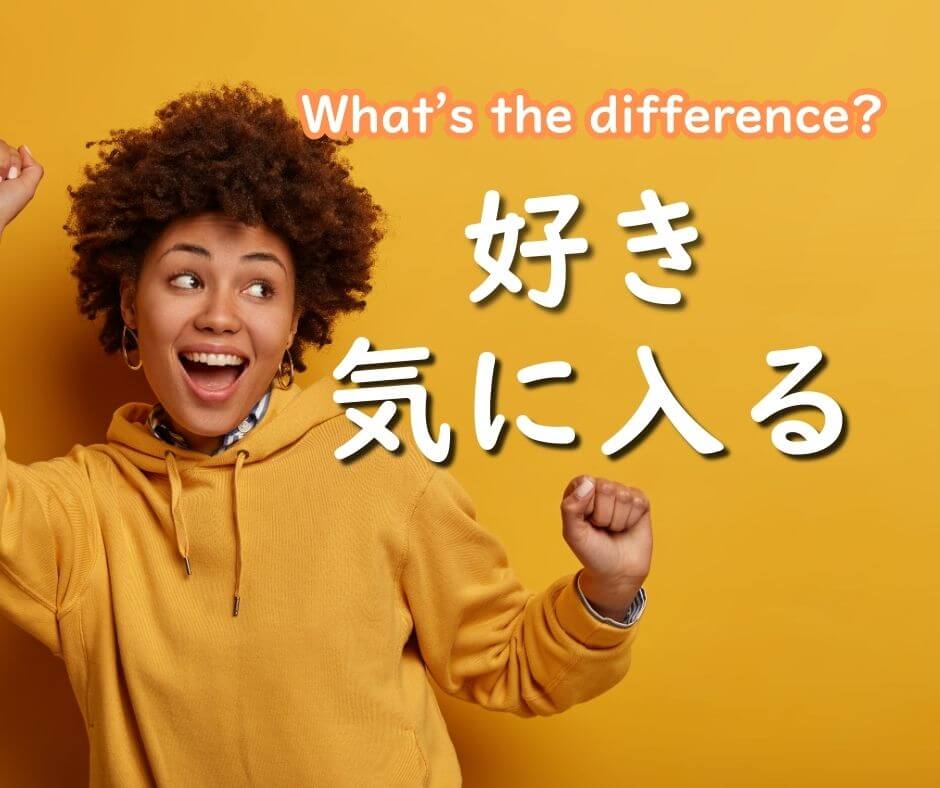
Unlock the Hidden Difference: 好き vs 気に入る
Understanding How Japanese Expresses “Liking” 💛When learning Japanese, many students translate both 好き and 気に入る as “to like.”But are they really the same?
Not exactly.
Today, let’s clearly break down the difference so you can sound more natural in real conversations.
1️⃣ First Big Difference: Grammar
Before meaning, we need to understand structure.
好き is a な-adjective
好き is NOT a verb. It is a な-adjective, just like:
- きれい
- clean, beautiful
- 便利
- convnient
- 有名
- famous
That’s why we say:
- コーヒーが好きです。
- 日本が好きです。
Grammatically, it describes a state.
So 好き expresses:
A state of liking
An existing preference
A feeling you already have
It is static.
気に入る is a verb
Dictionary form: 気に入る
Past: 気に入った
Polite: 気に入ります
It expresses:
The action/result of something becoming pleasing to you
It is dynamic.
2️⃣ Meaning Difference (State vs Result)
Now that we understand grammar, the nuance becomes clearer.
| 好き | 気に入る |
|---|---|
| な-adjective | Verb |
| State | Action / result |
| Ongoing feeling | After evaluation |
| Static | Dynamic |
好き(すき)– General Feelings of Like
好き expresses a general feeling of liking something or someone.
It describes your emotion or preference.
Basic Pattern:
Noun + が好きです
Examples:
- 私は猫が好きです。
- I like cats.
- 日本の音楽が好きです。
- I like Japanese music.
- コーヒーが好きです。
- I like coffee.
Key Point:
好き is about your ongoing feeling or preference.
It can be used for:
- People
- Food
- Hobbies
- Places
- Activities
It describes something you generally like.
気に入る – To Be Pleased With Something
気に入る means:
To like something because it matches your taste
To be satisfied with something
To be pleased with something
It is often used when you try, see, or experience something, and then decide you like it.
Basic Pattern:
Noun + が気に入りました
Examples:
- このバッグ、気に入りました。
- I like this bag. (I tried/checked it and it suits me.)
- 新しいアプリが気に入りました。
- I like this new app.
- このカフェ、すごく気に入っています。
- I really like this café. (After discovering it)
Key Point:
気に入る is often used:
- After buying something
- After trying something
- When something matches your personal taste
- When something “wins your heart”
It has a feeling of:
“Oh! This is nice. I really like it.”
Main Difference (Simple Comparison)
| 好き | 気に入る |
|---|---|
| General preference | Specific liking after experience |
| Ongoing feeling | Result of evaluation |
| Emotional preference | Personal satisfaction |
Think of it this way:
- 好き → “I like coffee.” (In general.)
- 気に入る → “I like this coffee.” (I tried it and it’s good.)
Can You Use Them Interchangeably?
Sometimes yes, but the nuance changes.
Example:
- この店が好きです。
- I like this shop. (General feeling)
- この店が気に入っています。
- I’ve grown to really like this shop. (It suits me well.)
Both are natural — but 気に入る feels more personal and experiential.
Quick Mini Quiz 📝
Which one sounds more natural?
- I like sushi.
- I tried this sushi restaurant and I love it!
Answers:
1 → 好き
2 → 気に入る
🌸 Final Tip
If you’re talking about your general likes → use 好き
If you’re talking about something that impressed you after trying it → use 気に入る
Understanding this nuance will instantly make your Japanese sound more natural and expressive.
If you’re part of NanaFam, try making your own sentences using both 好き and 気に入る.
Which one do you use more often?
If you want to learn Japanese, improve your skills, or connect with native speakers and other learners, we can help. We offer one-on-one lessons, a supportive community, and on demand courses.
Website: nihongonana.com
Email: support@nihongonana.com
✅Book 1-on-1 lessons: https://nihongonana.com/lessons/
✅Join our Speaking Club: https://nihongonana.com/community/
✅Join our Course Waitlist: https://nihongonana.com/courses/
Recent Posts
-

Japanese School System and…
October 12, 2026
-

6 Beautiful Japanese Phrases…
October 10, 2026
-

The Japanese Custom That…
October 9, 2026
-

How to Say “Maybe”…
October 8, 2026
-

The Fascinating World of…
October 7, 2026
Leave Comment