
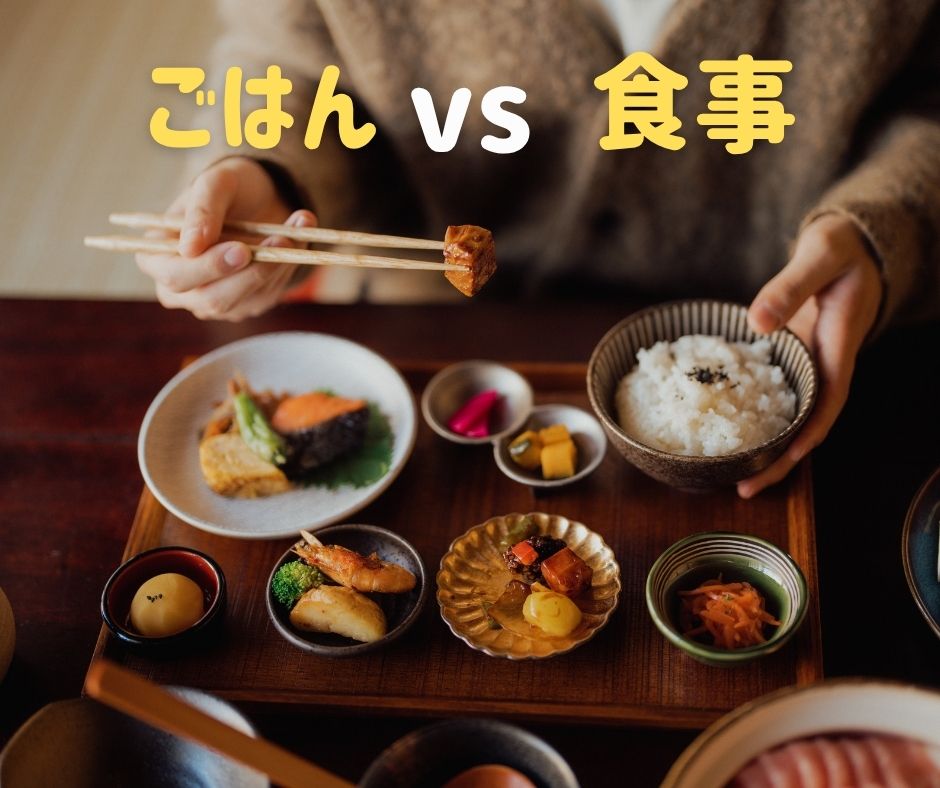
Have you ever wondered about the difference between ごはん and 食事?
Both words are related to meals and eating, but they are not always interchangeable. In this post, let’s learn how to use them naturally in everyday Japanese!
1. ごはん
Meaning: rice / meal
ごはん has two main meanings: cooked rice and a meal in general.
In everyday conversation, Japanese people often use ごはん when talking about eating, having a meal, or inviting someone out to eat.
Examples:
① ごはんを食べました。
→ I ate a meal. / I ate rice.
② もうごはん食べた?
→ Have you eaten yet?
③ 友だちとごはんを食べに行きます。
→ I’m going out to eat with a friend.
④ 朝ごはんを食べました。
→ I ate breakfast.
Useful expressions:
- 朝ごはん → Breakfast
- 昼ごはん → Lunch
- 晩ごはん → Dinner
💡 Tip: ごはん is very common in everyday conversation. When you invite a friend to eat, you can say:
「今度、一緒にごはん食べよう!」
→ Let’s have a meal together sometime!
2. 食事
Meaning: meal / eating
食事 refers to a meal or the act of eating. Unlike ごはん, it doesn’t specifically mean cooked rice.
It is often used when talking about eating habits, health, nutrition, or mealtimes. It can sound a little more formal or neutral than ごはん.
Examples:
① 食事をしました。
→ I had a meal.
② 一日三回、食事をします。
→ I eat three meals a day.
③ 食事の前に手を洗いましょう。
→ Let’s wash our hands before eating.
④ バランスのいい食事が大切です。
→ A balanced diet is important.
Useful expressions:
- 食事をする → To have a meal
- 食事の時間 → Mealtime
- 食事中 → While eating
- 食事制限 → Dietary restriction
💡 Tip: 食事 is useful when discussing eating in a general or more formal context, such as health advice or nutrition.
3. ごはん vs 食事: What’s the Difference?
| ごはん | 食事 |
|---|---|
| Rice or a meal | A meal or the act of eating |
| Very common in everyday conversation | Often used in more formal or general contexts |
| Frequently used with friends and family | Frequently used when discussing health and eating habits |
| ごはんを食べる | 食事をする |
Compare these two sentences:
① 友だちとごはんを食べました。
→ I had a meal with a friend.
② 友だちと食事をしました。
→ I had a meal with a friend.
Both are correct! The first sounds more casual and conversational, while the second can sound a little more neutral or formal.
Remember, this is a general tendency, not a strict rule. 食事 is also common in everyday Japanese.
4. A Few More Words Related to Rice and Meals 🍚
Besides ごはん and 食事, there are a few other useful Japanese words to know!
① 米
Meaning: uncooked rice
米 usually refers to rice before it is cooked.
Example:
米を買いました。
→ I bought rice.
② めし
Meaning: rice / meal
めし is a casual, rough-sounding word for rice or a meal. It is often associated with masculine or very informal speech.
Example:
もうめし食った?
→ Have you eaten yet?
💡 Be careful! めし can sound too rough in polite situations, so ごはん is a safer choice for everyday conversation.
③ ライス
Meaning: rice
ライス is a loanword from English, often used for rice served with Western-style dishes, such as curry rice.
Example:
カレーライスを食べました。
→ I ate curry rice.
5. Mini Quiz ✏️
Choose the most appropriate word for each sentence.
① 毎朝、( )を食べます。パンより米が好きです。
Every morning, I eat ( ). I prefer rice to bread.
A. 食事
B. ごはん
② 健康のために、バランスのいい( )を心がけています。
For my health, I try to eat balanced ( ).
A. 食事
B. めし
③ カレーと一緒に( )を注文しました。
I ordered ( ) to go with my curry.
A. 米
B. ライス
Answer
① B. ごはん
② A. 食事
③ B. ライス
Summary
- ごはん = cooked rice or a meal; very common in everyday conversation.
- 食事 = a meal or the act of eating; often used when discussing health, nutrition, and mealtimes.
- 米 = uncooked rice.
- めし = a casual, rough-sounding word for rice or a meal.
- ライス = rice, often used for dishes such as curry rice.
Now you know several useful words for talking about rice and meals in Japanese! Which one do you use most often? 🇯🇵