
 March 7, 2026
 No Comments
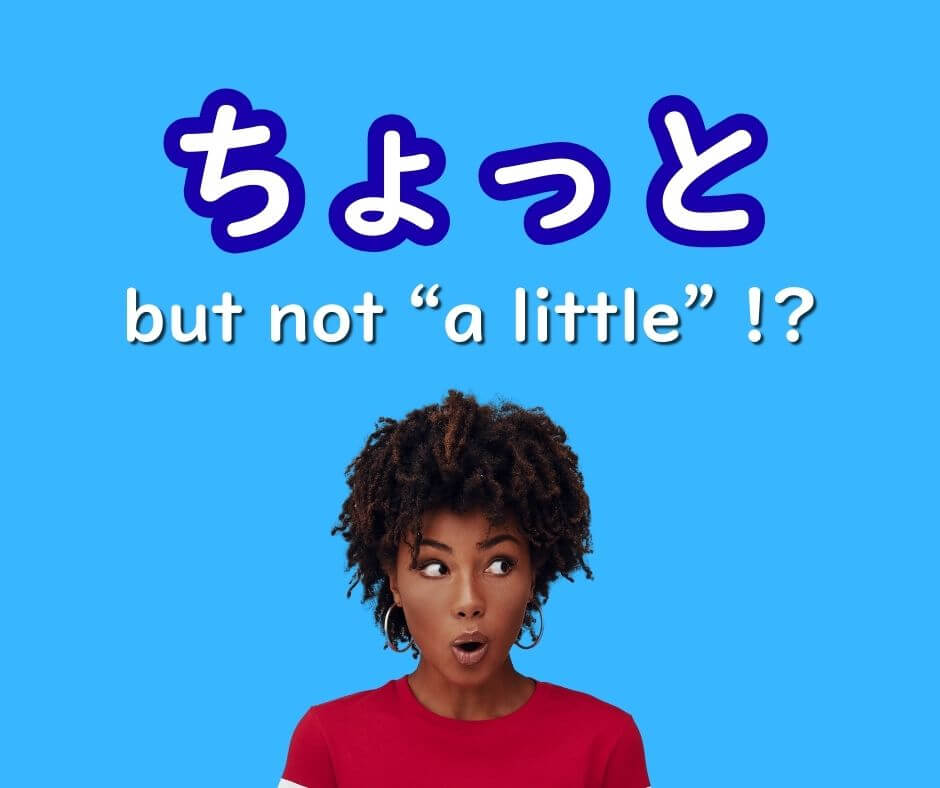
Why Japanese People Use ちょっと: The Surprising Truth
If you study Japanese for even a short time, you will probably hear the word ちょっと everywhere. At first, most learners learn that ちょっと means “a little.” While this translation is technically correct, in real conversations the word is much more flexible than that.
In fact, Japanese speakers use ちょっと for many different purposes. For example, it can soften statements, politely refuse something, show hesitation, or even express mild surprise. Because of this, understanding how the word is used can make your Japanese sound much more natural.
So, let’s take a closer look at how ちょっと actually works in everyday Japanese.
✅ちょっと = A Little / A Bit
This is the most basic meaning. Japanese speakers often use ちょっと to describe a small amount or degree of something.
Examples:
今日はちょっと寒いです。
It’s a little cold today.
コーヒーに砂糖をちょっと入れます。
I’ll add a little sugar to the coffee.
日本語がちょっと分かります。
I understand a little Japanese.
In these cases, ちょっと simply means “a little.”
✅ちょっと = “Excuse me” (Getting Someone’s Attention)
Another common way to use ちょっと is when you want to get someone’s attention or politely interrupt them.
Examples:
ちょっと、すみません。
Excuse me.
ちょっといいですか?
Do you have a moment?
This usage is very common in stores, restaurants, or when asking a stranger for help.
✅ちょっと = Softening a Request
Japanese communication often avoids sounding too direct. Adding ちょっと makes requests feel softer and more polite.
Example:
ちょっと待ってください。
Please wait a moment.
ちょっと見せてください。
Could you show me for a moment?
Without ちょっと, the request can sound slightly stronger.
✅ちょっと = A Polite Way to Refuse
This is one of the most interesting uses of ちょっと, and it often surprises learners.
Sometimes ちょっと actually means “That’s difficult…”, which is a polite way to say no.
Example:
A: 今日飲みに行きませんか?
Do you want to go for drinks today?
B: 今日はちょっと…
Hmm, today is a little…
Even though the sentence is unfinished, the meaning is clear:
“I can’t go today.”
Japanese speakers often stop after ちょっと… because the listener already understands.
✅ちょっと = Expressing Hesitation
Sometimes ちょっと is used when the speaker feels unsure or hesitant.
Example:
それはちょっと難しいですね。
That might be a bit difficult.
このデザインはちょっと…
This design is a bit…
Again, the speaker may leave the sentence unfinished to sound softer.
Why ちょっと Is So Important
One reason ちょっと appears so often in Japanese is that it helps keep conversations polite, indirect, and friendly.
Japanese communication often values soft expressions instead of strong or direct statements. Because of that, small words like ちょっと play a very big role.
Once you start noticing it, you will hear ちょっと everywhere in daily conversations.
Quick Practice
What does ちょっと mean in these sentences?
- 日本語がちょっと分かります。
- ちょっといいですか?
- 今日はちょっと…
Try to think about the nuance in each sentence.
Final Thoughts
Even though ちょっと literally means “a little,” its real meaning depends heavily on context. It can express:
- a small amount
- politeness
- hesitation
- a soft refusal
- getting someone’s attention
Learning words like ちょっと helps you understand how Japanese people actually communicate, not just how sentences are translated.
If you want to learn Japanese, improve your skills, or connect with native speakers and other learners, we can help. We offer one-on-one lessons, a supportive community, and on demand courses.
Website: nihongonana.com
Email: support@nihongonana.com
✅Book Private Lessons: https://nihongonana.com/lessons/
✅Join our Online Community: https://nihongonana.com/community/
✅Join our Group Courses: https://nihongonana.com/courses/
Recent Posts
-
Why Japanese People Use…
March 7, 2026
-

Visit These Beautiful Castles…
March 6, 2026
-

The Hidden Difference Between…
March 5, 2026
-

Traffic Rules in Japan:…
March 4, 2026
-

Unlock the Hidden Difference:…
March 3, 2026
Leave Comment