
 October 1, 2026
 No Comments
いい or よい? How to Say “Good” Naturally in Japanese
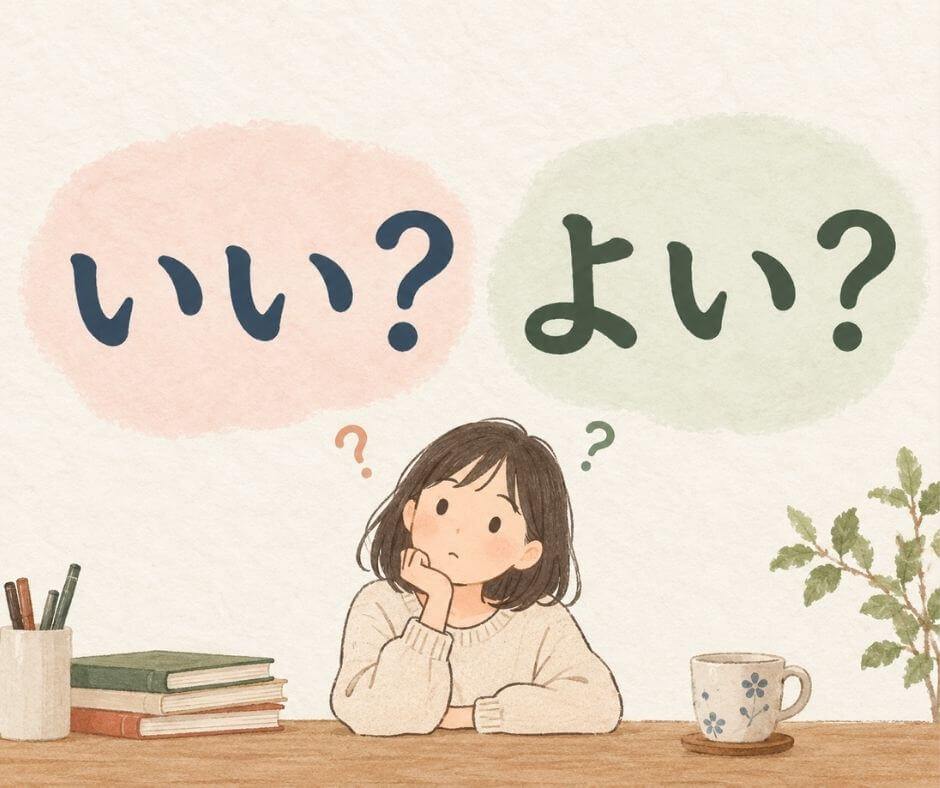
If you have studied Japanese for a while, you have probably seen both いい and よい 👀
Both words mean “good,” so what is the difference?
The good news is that they are basically the same word! However, they are used a little differently depending on the situation 😊
いい: The Most Common Way to Say “Good”
いい is the word you will hear most often in everyday Japanese.
It sounds natural and conversational, so Japanese people use it all the time when talking with friends, family, coworkers, and other people 👍
For example:
今日は天気がいいです。
The weather is good today.
このレストラン、いいね!
This restaurant is nice!
そのアイデア、いいと思います。
I think that idea is good.
You can also use いい to mean things like “nice,” “okay,” or “sounds good,” depending on the situation.
For example:
A: 明日、映画見に行かない?
Do you want to go see a movie tomorrow?
B: いいね!
Sounds good! 🎬
So if you simply want to say “good” in normal conversation, いい is usually the safest choice.
よい: More Formal or Written
よい has basically the same meaning as いい, but it often sounds more formal, literary, or written ✍️
You may see よい in:
- Formal writing
- Instructions
- Announcements
- Rules
- News
- Business Japanese
For example:
健康のために、よい食事を心がけましょう。
Try to maintain a good diet for your health.
よりよい方法を考えます。
We will consider a better method.
In casual conversation, using よい is not grammatically wrong, but it can sound slightly formal or stiff.
For example:
今日は天気がよいですね。
This is correct, but:
今日は天気がいいですね。
sounds more natural in everyday conversation 😊
But There Is One Important Grammar Rule!
Here is where things get interesting 👇
Although we usually say いい, when we change the word into other forms, we use よい as the base.
For example:
いい → よくない
good → not good
いい → よかった
good → was good
いい → よくなかった
good → was not good
We do NOT normally say:
❌ いくない
❌ いかった
Instead, we say:
⭕ よくない
⭕ よかった
For example:
昨日の映画はよかったです。
Yesterday’s movie was good.
今日は天気がよくないです。
The weather is not good today.
This happens because いい originally comes from よい, and the older form appears when the adjective changes 💡
いい vs よい: Quick Comparison
いい
- Very common in conversation
- Casual and natural
- Usually used when simply saying “good”
よい
- More formal
- Common in writing and announcements
- Used as the base when conjugating いい
Compare:
この店はいいです。
This restaurant is good.
この店はよくないです。
This restaurant is not good.
この店はよかったです。
This restaurant was good.
Notice how いい changes to よ when we conjugate it! 👀
よりよい: A Common Expression
One expression you may often see is:
よりよい
This means:
better / even better / improved
For example:
よりよい生活
a better life
よりよいサービス
better service
よりよい社会を作りたいです。
I want to create a better society.
In expressions like this, よい is much more common than いい ✨
So, Which One Should You Use?
In everyday conversation, use いい 👍
今日は天気がいいです。
The weather is good today.
But remember that when you change the form of いい, it becomes:
いい → よくない
いい → よかった
いい → よくなかった
And if you are reading formal Japanese, you may also see よい used instead of いい.
The easiest way to remember it is:
いい = everyday “good”
よい = formal “good” + the base form used for conjugation
Once you remember this pattern, using いい becomes much easier! 😊
If you want to learn Japanese, improve your skills, or connect with native speakers and other learners, we can help. We offer one-on-one lessons and a supportive community!
Website: nihongonana.com
Email: support@nihongonana.com
✅Private Lesson: NihongoNana Private Lessons
✅Online Community: NihongoNana Community
Recent Posts
-

いい or よい? How…
October 1, 2026
-

Reading Japanese Food Labels:…
September 30, 2026
-

A Special Silver Week…
September 29, 2026
-

〜てから vs 〜た後で: Japanese…
September 28, 2026
-

3 Popular Factory Tours…
September 26, 2026
Leave Comment