

 July 7, 2026
 No Comments
This is How to Effortlessly Master って and と in Japanese
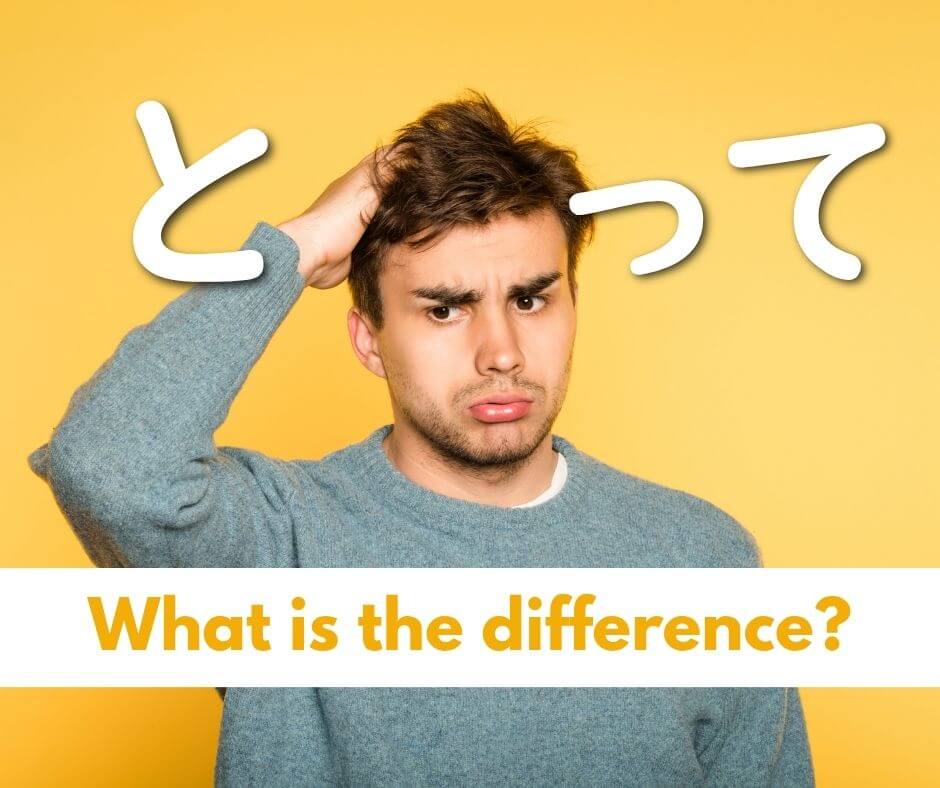
One of the most common questions Japanese learners ask is: “What’s the difference between って and と?” 🤔
Both と and って are particles that can be used to quote what someone says, thinks, hears, or writes. In English, they are often translated as “that” or quotation marks (“…”).
However, they are not always interchangeable. と is the standard and more formal quotation particle, while って is its casual spoken equivalent. In addition, って has another important use that と doesn’t—it can also replace は as a casual topic marker.
Let’s break down the differences so you’ll know exactly when to use each one!
1. と = Standard Quotation Particle
The particle と is the standard way to quote what someone says, thinks, hears, or writes.
Structure
Short Form + と + Verb
Common verbs:
- 言(い)います – to say
- 思(おも)います – to think
- 聞(き)きます – to hear/ask
- 書(か)いてあります – to be written
Examples
田中さんは「行きます」と言いました。
Tanaka said, “I’ll go.”
私は日本は安全だと思います。
I think Japan is safe.
先生は宿題があると言いました。
The teacher said there is homework.
ニュースで台風が来ると聞きました。
I heard on the news that a typhoon is coming.
2. って = Casual Quotation
って is the casual version of と.
You’ll hear it constantly in daily conversation, especially among friends.
Structure
Short Form + って + Verb
Examples
田中さん、行くって言ってたよ。
Tanaka said he’s going.
今日は暑いって聞いたよ。
I heard it’s hot today.
この店、おいしいってみんな言ってる。
Everyone says this restaurant is good.
日本は安全だって思う。
I think Japan is safe.
Notice that 言(い)う often becomes 言(い)ってる or 言(い)ってた in casual speech.
3. って Can Replace は (Topic Marker)
This is something many learners don’t realize!
Besides quoting someone, って can also replace は when introducing a topic in casual conversation.
Examples
日本って面白い国ですね。
Japan is an interesting country.
この映画って知ってる?
Do you know this movie?
なな先生って優しいね。🫢
Nana is kind, isn’t she?
This usage is extremely common in spoken Japanese.
4. Which One Sounds More Natural?
Imagine you’re talking with your friend.
❌ 明日行くと言ってた。
⭕ 明日行くって言ってた。
The second sentence sounds much more natural in everyday conversation.
However, if you’re writing an essay or speaking politely:
⭕ 明日行くと言っていました。
Using と sounds more appropriate.
5. Can They Be Interchangeable?
Sometimes, yes!
For example:
今日は休みだと言っていました。
今日は休みだって言っていました。
Both mean:
“He/She said today is a day off.”
The difference is mostly tone.
と
- More neutral
- More formal
- Better for writing
- Common in polite speech
って
- Casual
- Friendly
- Very common in spoken Japanese
- Rarely used in formal writing
6. Another Common Use of って
Sometimes って means:
- “about…”
- “speaking of…”
- “what is…?”
Examples
日本語って難しいね。
Japanese is difficult, isn’t it?
それってどういう意味?
What does that mean?
N4って難しい?
Is the N4 difficult?
This usage comes from って acting as a casual topic marker, so it’s something you’ll hear all the time in conversations.
Quick Comparison
| と | って |
|---|---|
| Standard quotation particle | Casual quotation particle |
| Neutral or formal | Casual |
| Common in writing | Mostly used in spoken Japanese |
| Used in polite speech | Used with friends and family |
| Cannot replace は | Can replace は as a casual topic marker |
Which One Should You Learn First?
If you’re a beginner, start with と because it appears in textbooks and works in every situation.
Once you become comfortable with everyday Japanese, start using って. Native speakers use it constantly, so understanding it will make conversations much easier.
A simple way to remember them is:
- と = Standard Japanese
- って = Casual spoken Japanese
Mastering both will help you understand real conversations and sound much more natural when speaking Japanese.
Key Takeaways
While they sometimes express the same meaning, choosing the right one depends on the level of formality and the situation.
Both と and って can quote what someone says, thinks, or hears.
と is the standard quotation particle used in both writing and formal speech.
って is the casual spoken version of と.
って can also replace は as a casual topic marker.
If you want to learn Japanese, improve your skills, or connect with native speakers and other learners, we can help. We offer one-on-one lessons and a supportive community!
Website: nihongonana.com
Email: support@nihongonana.com
✅Private Lesson: NihongoNana Private Lessons
✅Online Community: NihongoNana Community
Recent Posts
-

The Fascinating World of…
October 7, 2026
-
違う or 異なる? How…
October 6, 2026
-

3 Amazing Bookstores You…
October 5, 2026
-

Say “No” Like a…
October 3, 2026
-

Asian Games 2026: A…
October 2, 2026
Leave Comment