 January 19, 2026
 No Comments
Practical Guide to the Japanese Address System
The Japanese address system is very different from those used in many other countries. Instead of street names and house numbers, Japan uses areas, blocks, and building numbers.
In this article, you’ll learn how the Japanese address system works, what each part means, how to read and write addresses, and important keywords used for mail and delivery.
1. How the Japanese Address System Works
Japanese addresses are based on administrative areas, not streets.
Locations are identified by dividing cities into smaller and smaller units.
The order goes from large to small:
- Prefecture
- City / Ward / Town
- Area name
- Block numbers (丁目・番・号)
- Building name and room number
This system makes sense once you understand that addresses are based on zones, not road names.
2. Basic Structure of a Japanese Address
A standard Japanese address looks like this (example):
〒160-0023
東京都新宿区西新宿7丁目8番1号
NihongoNanaビル 101
Let’s look at each part in detail.
3. Each Address Item Explained
① Postal Code(郵便番号)
Format: 〒123-4567
- Always 7 digits
- Often written at the top
- The 〒 symbol means “postal”
How to read:
〒160-0023 → ichi-roku-zero, zero-zero-ni-san
(Numbers are usually read individually.)
② Prefecture(都・道・府・県)
Japan has 47 prefectures, and each ends with one of these:
| Kanji | Reading | Meaning |
|---|---|---|
| 都 | to | Metropolis (Tokyo) |
| 道 | do | Territory (Hokkaido) |
| 府 | fu | Urban prefecture (Osaka, Kyoto) |
| 県 | ken | Prefecture |
Example:
東京都, 北海道, 大阪府, 愛知県
③ City / Ward / Town(市・区・町・村)
| Kanji | Reading | Used for |
|---|---|---|
| 市 | shi | City |
| 区 | ku | Ward (in large cities) |
| 町 | machi / cho | Town |
| 村 | mura / son | Village |
Example:
名古屋市, 新宿区, 中村町, 豊根村
📌 In rural areas, 郡, meaning district, may appear between the prefecture and the town or village.
④ Area Name(町名)
This is the local area name within a city or ward.
Example:
西新宿
Area names are extremely important because there are no street names.
⑤ Block Numbers(丁目・番・号)
This is the core of the Japanese address system.
| Kanji | Reading | Meaning |
|---|---|---|
| 丁目 | chome | District |
| 番 | ban | Block |
| 号 | gō | Building number |
Example:
7丁目8番1号
→ District 7, Block 8, Building 1
📌 In casual writing, this is often shortened to 7-8-1, and the hyphens represent the particle 「の」.
⑥ Building Name & Room Number
For apartments or offices:
Example:
NihongoNanaビル 101
→ Room 101 of NihongoNana Building
Room numbers usually come after the building name.
4. How to Write a Japanese Address
Writing Rules
- Write from top to bottom or left to right
- Order is large → small
- Numbers are often written in Arabic numerals
Example
〒160-0023
東京都新宿区西新宿7丁目8番1号
NihongoNanaビル 101
5. Important Address & Mail Vocabulary
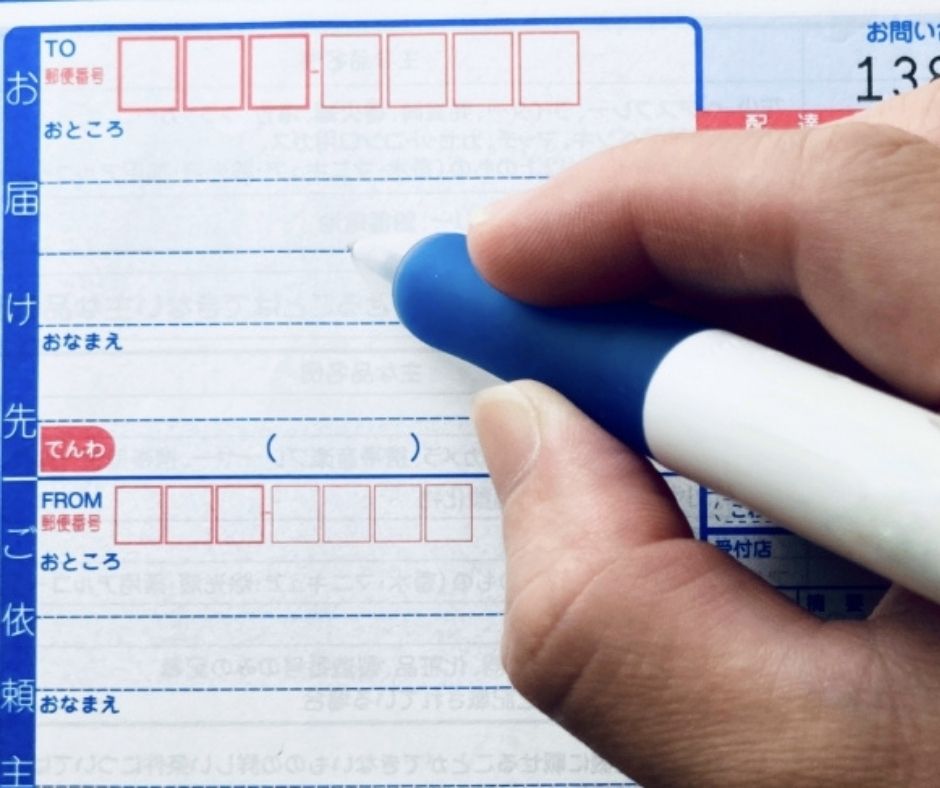
These words are essential when sending mail, filling out forms, or using delivery services.
| Japanese | Reading | Meaning |
|---|---|---|
| 宛名 | あてな | Name of recipient |
| 宛先 / お届け先 | あてさき / おとどけさき | Delivery address |
| 送り主 / ご依頼主 | おくりぬし / ごいらいぬし | Sender / requester |
| 住所 | じゅうしょ | Address |
| 郵便番号 | ゆうびんばんごう | Postal code |
| 氏名 | しめい | Full name |
| 様 | さま | Polite title (Mr./Ms.) |
Example:
山田太郎様(Recipient name on mail)
6. Key Points to Remember
- Japanese addresses are area-based, not street-based
- Always include 丁目・番・号
- The order is large → small
- Use 様 for polite mail
- Postal code placement is important
Final Thoughts
The Japanese address system may seem complicated, but it is highly organized and logical once you understand its structure. Learning how to read and write addresses—and knowing key terms like 宛名, 宛先, and 送り主—will help you live, work, and communicate more smoothly in Japan.
If you want to learn Japanese, improve your skills, or connect with native speakers and other learners, we can help. We offer one-on-one lessons, a supportive community, and on demand courses.
Website: nihongonana.com
Email: support@nihongonana.com
✅Book 1-on-1 lessons: https://nihongonana.com/lessons/
✅Join our Speaking Club: https://nihongonana.com/community/
✅Join our Course Waitlist: https://nihongonana.com/courses/
Recent Posts
-
Japanese Grammar Made Easy:…
July 22, 2026
-

4 Unforgettable Theme Parks…
July 21, 2026
-

The Easy Way to…
July 20, 2026
-

Japan’s Schools Going Digital:…
July 18, 2026
-

How to Say I’m…
July 17, 2026
Leave Comment