
 May 9, 2026
 No Comments
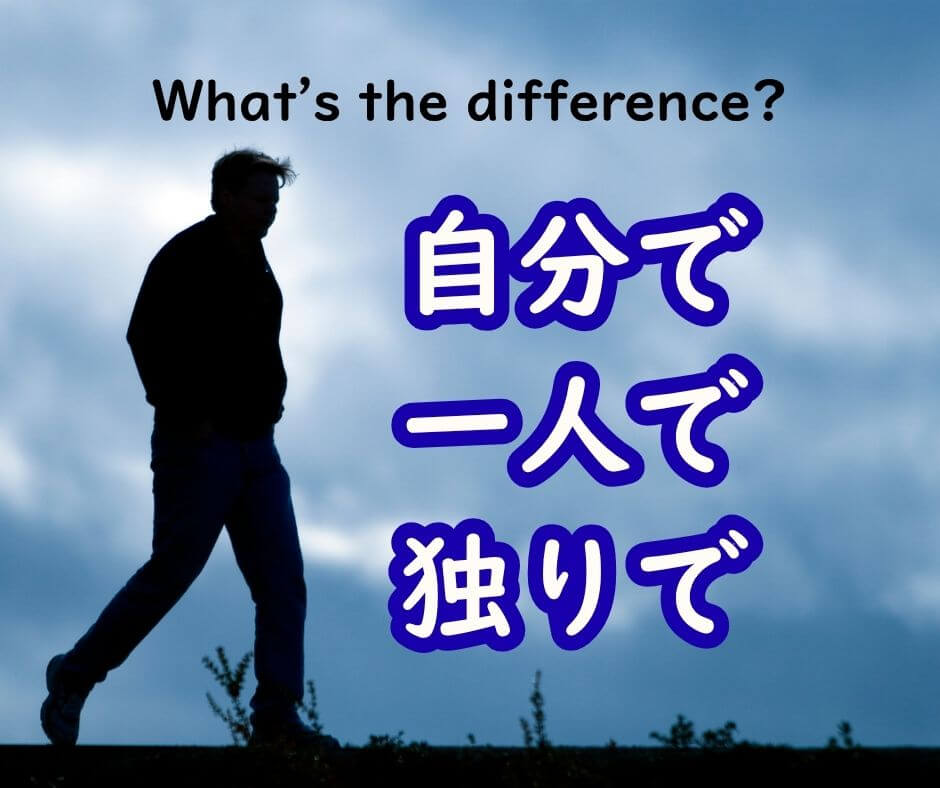
Here is The Important Difference Between 一人で and 自分で
Many Japanese learners get confused between 一人で and 自分で because both can translate to “by myself” in English.
For example:
- “I went by myself.”
- “I made it by myself.”
In English, both sentences use almost the same phrase.
But in Japanese, the nuance is completely different!
In this post, let’s clearly learn the difference between:
一人で
自分で
and also look at another expression:
独りで
so you can sound much more natural in Japanese ✨
① 一人で – By Myself / Alone
This is the most common and useful expression.
Use 一人で when:
- you do something without other people
- you go somewhere alone
- you eat, travel, study, or live alone
Examples
一人で映画を見ました。
I watched a movie by myself.
一人で旅行するのが好きです。
I like traveling alone.
昨日は一人でご飯を食べました。
I ate dinner alone.
一人でカフェに行くことが多いです。
I often go to cafés alone.
This expression is very neutral and natural.
② 自分で – By Myself / On My Own
自分で focuses more on doing something yourself without help.
The focus is not “alone,” but rather: “I did it myself.”
Examples
自分で料理を作りました。
I cooked by myself.
この机は自分で組み立てました。
I assembled this desk myself.
自分で決めてください。
Please decide for yourself.
宿題は自分でやってください。
Please do your homework yourself.
So remember:
一人で → without other people
自分で → without help
This is the key difference!
③ Additional: 独りで
独りで is pronounced the same as 一人で, but the kanji is different.
一人 → simply one person
独り → loneliness / solitude
独りで often sounds more emotional, lonely, or literary.
Examples
独りで泣いていました。
I was crying alone.
独りで生きていく。
To live alone.
独りの時間が好きです。
I like spending time alone. In everyday conversation, most people usually write 一人で instead.
一人で vs 自分で
This difference confuses many learners!
| Japanese | Meaning |
|---|---|
| 一人で | without other people |
| 自分で | without help |
Compare These
一人で料理しました。
I cooked alone.
(Maybe nobody was with me.)
自分で料理しました。
I cooked myself.
(Maybe someone usually cooks for me.)
Sometimes both are possible:
一人で自分で料理しました。
I cooked alone by myself.
Mini Quiz
Choose the best word!
1. 私は___日本へ来ました。
(a) 一人で
(b) 自分で
➡ Answer: (a) (The focus is coming alone.)
2. このアプリは___作りました。
(a) 一人で
(b) 自分で
➡ Answer: (b) (The focus is making it yourself.)
3. 彼は___泣いていました。
(a) 独りで
(b) 自分で
➡ Answer: (a)
Final Thoughts
The biggest confusion for learners is usually:
- 一人で = alone
- 自分で = yourself / without help
Once you understand this difference, your Japanese will sound much more natural ✨
And if you see 独りで, remember that it usually has a more emotional or lonely nuance.
Have you ever traveled 一人で in Japan? 😊
If you want to learn Japanese, improve your skills, or connect with native speakers and other learners, we can help. We offer one-on-one lessons and a supportive community!
Website: nihongonana.com
Email: support@nihongonana.com
✅Private Lesson: NihongoNana Private Lessons
✅Online Community: NihongoNana Community
Recent Posts
-
What Is Wagashi? Discover…
September 24, 2026
-
〜たい vs 〜てみたい: The…
September 23, 2026
-

Famous Japanese Watchmakers You…
September 22, 2026
-

Visiting a Hospital in…
September 21, 2026
-

What Is Silver Week…
September 19, 2026
Leave Comment