
 June 17, 2026
 No Comments
10 Essential Japanese Expressions with 気 You Need to Know
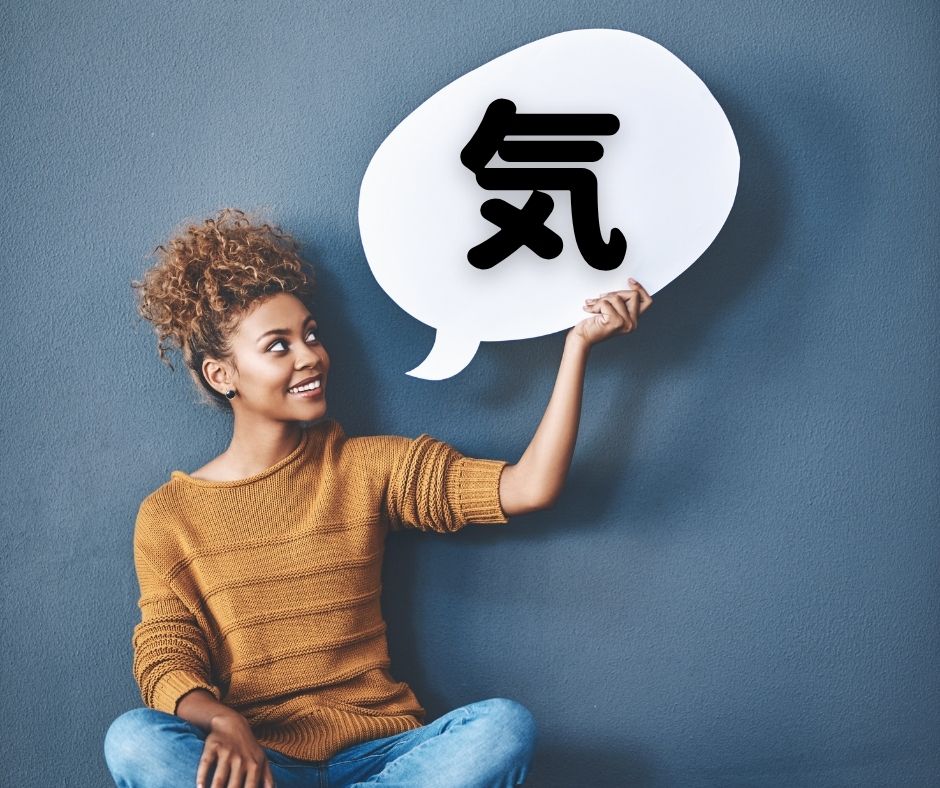
If you’ve been studying Japanese for a while, you’ve probably noticed that the kanji 気 (き) appears everywhere.
From 気をつけて (“take care”) to 気になる (“to be curious about”), this single character shows up in countless everyday expressions.
So, what does 気 (き) actually mean?
While there’s no perfect English equivalent, 気 (き) often refers to your mind, feelings, mood, attention, spirit, or energy. Understanding how it works can help you sound more natural and better understand native Japanese conversations.
Let’s look at 10 essential expressions with 気 (き) that you’ll hear all the time in Japan.
1. 元気(げんき)
Meaning: Healthy; energetic; well
Although you may already know this word, it’s made up of the kanji 元 (origin) and 気 (energy).
Example:
- お元気ですか。 “How are you?”
- 元気です! “I’m doing well!”
2. 気をつける(きをつける)
Meaning: To be careful; to take care
Literal meaning: To attach your attention
Example:
- 車に気をつけてください。 “Please be careful of cars.”
You’ll often hear 気をつけて! as a quick way to say “Take care!”
3. 気になる(きになる)
Meaning: To be interested in; to be curious about; to worry about
Literal meaning: To become your concern
Example:
- あの映画が気になります。 “I’m interested in that movie.”
Depending on the context, it can also mean something is bothering you.
- 試験の結果が気になります。 “I’m worried about the test results.”
4. 気にする(きにする)
Meaning: To worry about; to care about
Literal meaning: To make something your concern
Example:
- 小さいことを気にしないでください。 “Don’t worry about small things.”
A common phrase is:
- 気にしないで! “Don’t worry about it!”
5. 気がする(きがする)
Meaning: To feel like; to have a feeling that
Example:
- 明日は雨が降る気がします。 “I have a feeling it’ll rain tomorrow.”
Japanese speakers often use this expression to soften their opinions.
6. 気に入る(きにいる)
Meaning: To like; to become fond of
Literal meaning: To enter your feelings
Example:
- このカフェが気に入りました。 “I like this café.”
When shopping or trying something new, you’ll hear this expression frequently.
7. 気を使う(きをつかう)
Meaning: To be considerate; to be thoughtful
Literal meaning: To use your attention
Example:
- 彼はいつも周りの人に気を使っています。 “He’s always considerate of the people around him.”
Being able to 気を使う is highly valued in Japanese culture.
8. 気がつく(きがつく)
Meaning: To notice; to realize
Literal meaning: Your attention arrives
Example:
- 財布がないことに気がつきました。 “I realized my wallet was missing.”
9. 気が合う(きがあう)
Meaning: To get along well; to click with someone
Literal meaning: Your feelings match
Example:
- 私たちは気が合います。 “We get along well.”
Use this expression when you naturally connect with someone.
10. 気分転換(きぶんてんかん)
Meaning: A change of pace; a mood refresh
Example:
- 気分転換に散歩しましょう。 “Let’s go for a walk for a change of pace.”
This is a useful phrase when you need a break from work or studying.
Why Is 気 (き) Used So Often in Japanese?
The idea of 気 (き) is deeply rooted in Japanese culture and language. It can describe a person’s emotions, awareness, energy, intentions, and relationships with others.
That’s why you’ll find 気 (き) in hundreds of common expressions.
Instead of memorizing each phrase separately, try thinking of 気 (き) as a person’s mental or emotional state. This can make it easier to understand new expressions as you encounter them.
Final Thoughts
Learning expressions with 気 (き) is one of the fastest ways to sound more natural in Japanese.
Start by using these phrases in your daily conversations:
- 気をつけて
- 気になる
- 気にしないで
- 気がする
The more you hear and use them, the more intuitive they will become.
Which expression with 気 (き) do you hear most often?
If you want to learn Japanese, improve your skills, or connect with native speakers and other learners, we can help. We offer one-on-one lessons and a supportive community!
Website: nihongonana.com
Email: support@nihongonana.com
✅Private Lesson: NihongoNana Private Lessons
✅Online Community: NihongoNana Community
Recent Posts
-

8 Essential Japanese Directions…
September 3, 2026
-

The Surprising World of…
September 2, 2026
-

Natural Disasters in Japan:…
September 1, 2026
-

Practical Japanese House Vocabulary…
August 31, 2026
-

What Is 24-Hour Television?…
August 29, 2026
Leave Comment