
 January 15, 2026
 No Comments
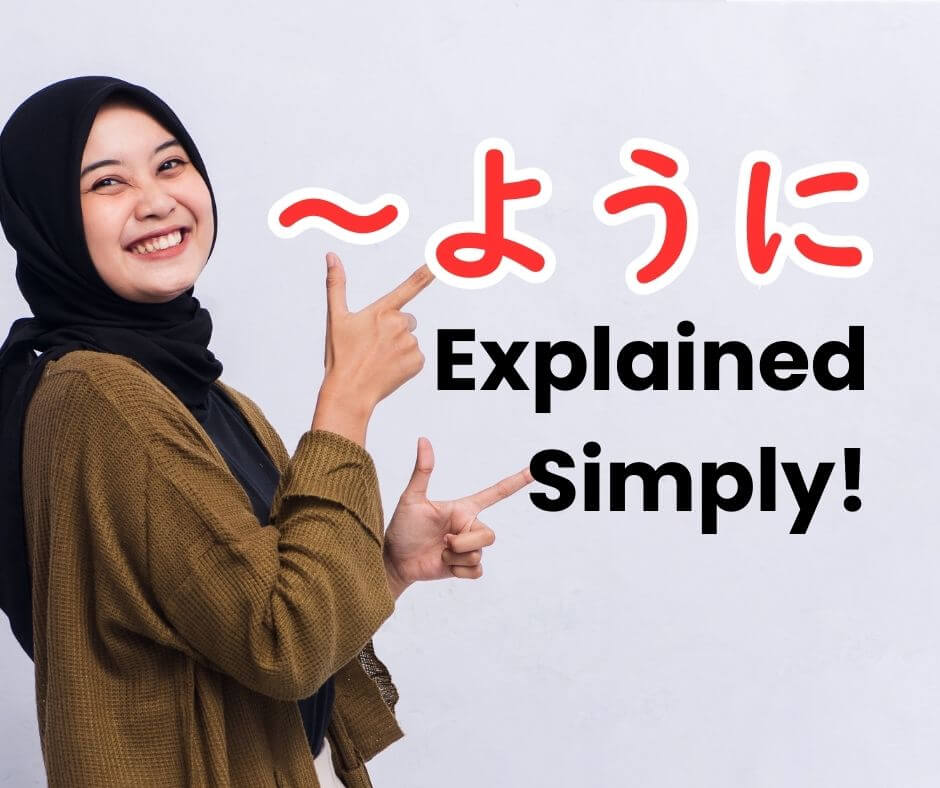
Are You Confused by ~ように? 6 Real-Life Uses Made Easy
「ように」 is one of the most useful Japanese grammar patterns because it can express purpose, change, effort, instructions, wishes, and comparisons—all with the same core idea:
✅ ように = “in a way that…” / “so that…” / “like…”
In this post, you’ll learn 6 different usages of ~ように with easy explanations and lots of examples.
1) Purpose: ~ように (Purpose)
Meaning:
“so that…” / “in order to…”
Used when the goal is something you can’t fully control (ability, natural result, condition).
Form:
- Vる / Vない + ように
- N + の + ように (rare, more like “so that it becomes like…”)
Examples:
- 忘れないように、メモします。
- I’ll take notes so that I don’t forget.
- 日本語が上手になるように、毎日練習しています。
- I practice every day so that I can get better at Japanese.
- 遅れないように、早く出ます。
- I’ll leave early so that I won’t be late.
✅ Tip:
If you can control it directly, you often use ~ために instead.
But for ability/result, ~ように is very common.
2) Change: ~ようになる (Change)
Meaning:
“to become able to…” / “to start to…”
Shows a change over time.
Form:
- Vる + ようになる → become able to / start to
- Vない + ようになる → stop doing / become not to
Examples:
- 日本語が話せるようになりました。
- I became able to speak Japanese.
- 早く起きるようになりました。
- I started waking up early.
- 甘いものを食べないようになりました。
- I stopped eating sweets.
✅ Super natural in daily conversation!
3) Make an effort / Habit: ~ようにする (Effort)
Meaning:
“try to…” / “make sure to…”
Used for habits and conscious effort.
Form:
- Vる + ようにする
- Vない + ようにする
Examples:
- 毎日日本語を聞くようにしています。
- I try to listen to Japanese every day.
- 夜ふかししないようにしています。
- I try not to stay up late.
- 野菜を食べるようにしてね。
- Try to eat vegetables, okay?
✅ Nuance: “I’m making an effort” / “I try to remember.”
4) Instruction / Request (Reported): ~ように言う (Instruction)
Meaning:
“tell someone to…” / “instruct someone to…”
Often used when you explain what you told someone.
Form:
- Person に + Vるように言う
- Person に + Vないように言う
Examples:
- 先生は学生に、宿題を出すように言いました。
- The teacher told the students to submit their homework.
- 母に、早く帰るように言われました。
- My mom told me to come home early.
- 彼に、遅れないように言ってください。
- Please tell him not to be late.
✅ This is very common at work and in school.
5) Wish / Prayer: ~ますように (Wish)
Meaning:
“I hope…” / “May…”
Used for wishes, prayers, and hopes (polite and soft).
Form:
- Vます + ように
(often ends the sentence)
Examples:
- 明日、晴れますように。
- I hope it will be sunny tomorrow.
- 試験に合格しますように。
- I hope I pass the exam.
- みんなが幸せでありますように。
- May everyone be happy.
✅ You often see this written on:
- 絵馬(えま) at shrines
- message cards / captions
6) Comparison / Example: ~のよう(に) (Example)
Meaning:
“like…” / “as if…” / “similar to…”
Form:
- N + のように + V / Adj
- N + のような + N
Examples:
- 彼は鳥のように空を飛びたいと言った。
- He said he wants to fly like a bird.
- 天使のような人ですね。
- You’re like an angel (such an angelic person).
- 雪のように白い。
- White like snow.
✅ よう = “seems like / resembles”
Summary Chart
| Usage | Pattern | Meaning |
|---|---|---|
| Purpose | Vる / Vない + ように | so that… |
| Change | Vる / Vない + ようになる | start to / become able to / stop doing |
| Habit / effort | Vる / Vない + ようにする | try to / make sure to |
| Instruction | Vる / Vない + ように言う | tell someone to… |
| Wish | Vます + ように | I hope… / may… |
| Comparison | N のように / のような | like… / similar to… |
If you want to learn Japanese, improve your skills, or connect with native speakers and other learners, we can help. We offer one-on-one lessons, a supportive community, and on demand courses.
Website: nihongonana.com
Email: support@nihongonana.com
✅Book 1-on-1 lessons: https://nihongonana.com/lessons/
✅Join our Speaking Club: https://nihongonana.com/community/
✅Join our Course Waitlist: https://nihongonana.com/courses/
Recent Posts
-

The Hidden World of…
March 13, 2026
-

No More Confusion :…
March 12, 2026
-

Remembering What Happened on…
March 11, 2026
-

More Different Practical Ways…
March 10, 2026
-
The Simple Taste of…
March 9, 2026
Leave Comment