
Have you ever wanted to say:
- “I went to Japan for the first time in five years.”
- “I ate sushi for the first time in months.”
- “I exercised for the first time in a week.”
Japanese has a simple pattern for expressing this idea.
Once you learn it, you’ll be able to talk naturally about things you haven’t done for a long time.
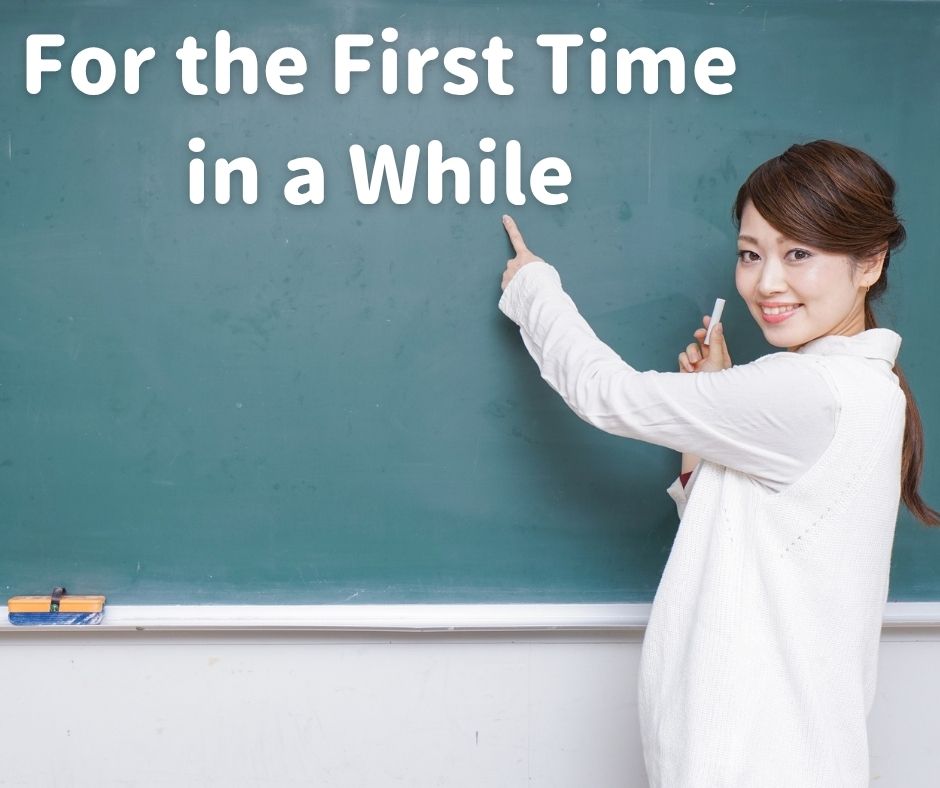
For the First Time in a While
When you don’t want to say exactly how long it’s been, use:
久しぶりに + Verb
This means:
- for the first time in a while
- after a long time
Examples
- 久しぶりに寿司を食べました。
I ate sushi for the first time in a while.
- 久しぶりに運動しました。
I exercised for the first time in a while.
- 久しぶりに友達に会いました。
I met my friend for the first time in a while.
Want to Say Exactly How Long?
Simply replace 久しぶり with a period of time.
Time Period + ぶりに + Verb
This means:
“for the first time in…”
Examples
- 1週間ぶりにジムへ行きました。
I went to the gym for the first time in a week.
- 3か月ぶりに映画を見ました。
I watched a movie for the first time in three months.
- 半年ぶりに運転しました。
I drove for the first time in six months.
- 1年ぶりに実家へ帰りました。
I went back to my parents’ home for the first time in a year.
- 5年ぶりに日本へ行きました。
I went to Japan for the first time in five years.
- 10年ぶりに高校の友達に会いました。
I met my high school friend for the first time in ten years.
The Pattern
Whether you say 久しぶりに or 〇〇ぶりに, the sentence structure stays the same.
〇〇ぶりに + Verb
Examples:
- 久しぶりに旅行しました。I traveled for the first time in a while.
- 2か月ぶりに旅行しました。I traveled for the first time in two months.
- 5年ぶりに旅行しました。I traveled for the first time in five years.
Just change the time expression depending on how long it’s been!
Try It Yourself!
Can you make a sentence using one of these?
- 1週間ぶりに…
- 半年ぶりに…
- 3年ぶりに…
- 久しぶりに…
It’s an easy pattern that you’ll hear often in everyday conversations, interviews, and even on the news, so it’s definitely worth learning!