
 August 27, 2025
 No Comments
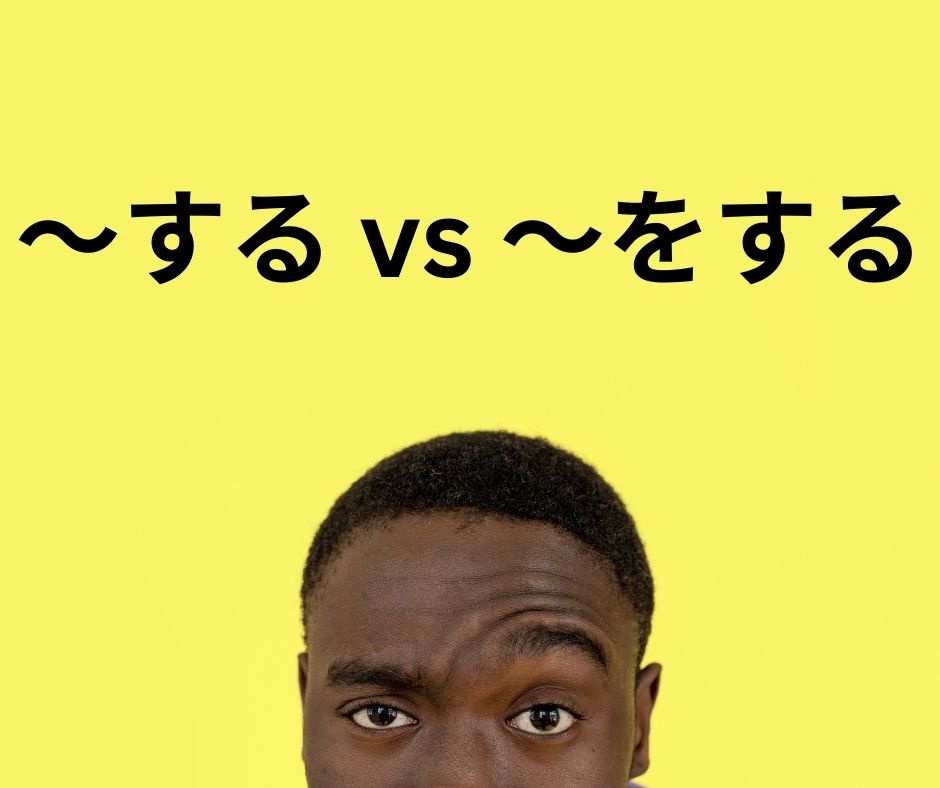
How to Use “する” Verbs the Right Way: 〜する vs 〜をする
If you’ve been learning Japanese, you’ve probably noticed that many common verbs use する.
Words like 勉強する (to study), 運動する (to exercise), and 電話する (to make a phone call) are all “する verbs.”
But sometimes you’ll also see them with を, like 勉強をする or 運動をする.
So… what’s the difference? And when should you use 〜する vs 〜をする?
Let’s break it down.
1. The Basic Rule
- 〜する: Most natural and most common.
- 〜をする: Also correct, but feels a little more formal, explanatory, or old-fashioned.
For example:
- 勉強する = to study
- 勉強をする = to do study (sounds slightly more deliberate or formal)
Both are grammatically fine, but in everyday conversation, Japanese people usually prefer the shorter 〜する form.
2. When “をする” is More Common
There are some cases where 〜をする is used more naturally than just 〜する:
- With physical or tangible objects
- ネクタイをする = to wear a tie
- 指輪をする = to wear a ring
Here, “をする” describes putting on/using the object. You cannot say ネクタイする.
- To add emphasis
- 勉強をしないと合格できません。
(“If you don’t do studying, you can’t pass.”)
Adding を can sound a little stronger or more serious.
- 勉強をしないと合格できません。
3. Interchangeable Cases
For many abstract nouns, both are fine:
- 運動する / 運動をする = to exercise
- 質問する / 質問をする = to ask a question
- 会話する / 会話をする = to have a conversation
You can use either one. 〜する is shorter and more natural in casual speech, while 〜をする sometimes appears in writing or polite conversation.
4. A Nuance to Remember
Think of it this way:
- 〜する = the default verb form
- 〜をする = adds a sense of “doing (the noun) as an action”
So, if you want to sound more conversational: stick with 〜する.
If you want to sound more formal, explanatory, or polite: 〜をする works.
Quick Practice
Try rewriting these with both versions:
- to study → _______
- to drive → _______
- to cook → _______
Conclusion
Japanese する verbs are super flexible, and both 〜する and 〜をする are correct.
The difference is mostly about style and nuance:
- Use 〜する for everyday, natural Japanese.
- Use 〜をする when emphasizing, sounding formal, or talking about physical objects like clothes and accessories.
Mastering this small difference will make your Japanese sound smoother and more natural!
If you want to learn Japanese, improve your skills, or connect with native speakers and other learners, we can help. We offer one-on-one lessons, a supportive community, and on demand courses.
Website: nihongonana.com
Email: support@nihongonana.com
✅Book 1-on-1 lessons: https://nihongonana.com/lessons/
✅Join our Speaking Club: https://nihongonana.com/community/
✅Join our Course Waitlist: https://nihongonana.com/courses/
Recent Posts
-

The Hidden World of…
March 13, 2026
-

No More Confusion :…
March 12, 2026
-

Remembering What Happened on…
March 11, 2026
-

More Different Practical Ways…
March 10, 2026
-

The Simple Taste of…
March 9, 2026
Leave Comment