

 June 22, 2026
 No Comments
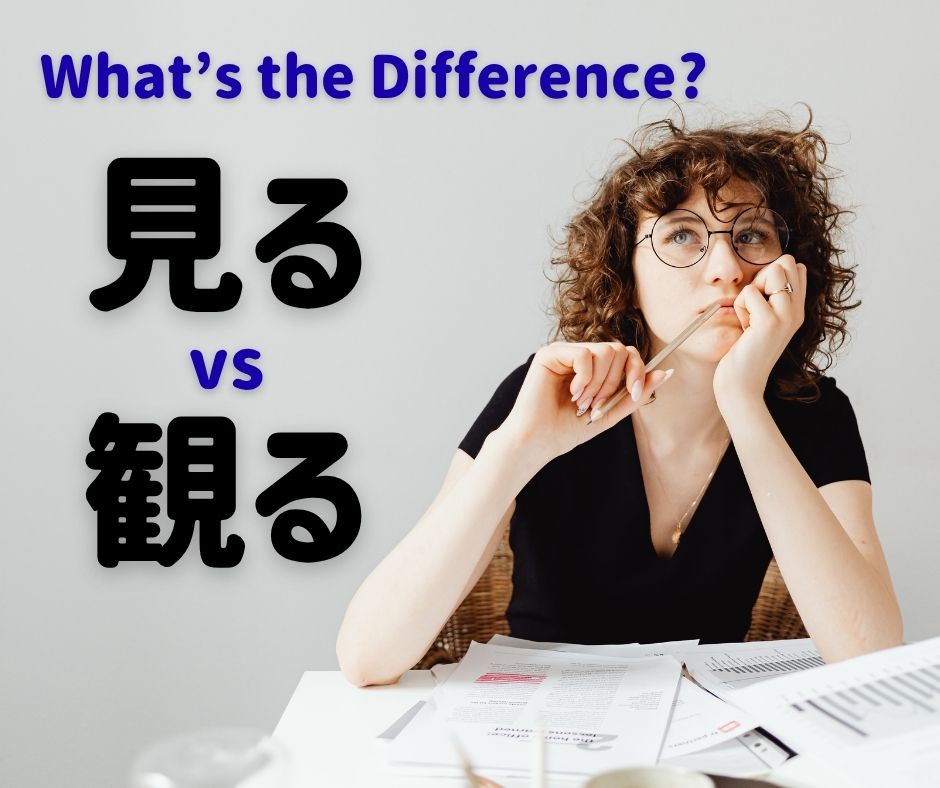
See or Watch? How to Choose Between 見る and 観る
If you’ve been learning Japanese, you may have noticed that the verb みる (miru) can be written with different kanji.
Two of the most common are 見る and 観る. Although they have the same pronunciation, they are used in different situations.
Understanding the difference can help you sound more natural and better understand written Japanese.
Let’s take a closer look.
見る: To See, Look at, or Check
見る is the most common and versatile way to write miru.
It refers to using your eyes to see, look at, check, or watch something in everyday situations.
If you’re unsure which kanji to use, 見る is usually the safest choice.
Common examples
- 写真を見る。
To look at photos. - 時計を見る。
To check the time. - メールを見る。
To check an email. - テレビを見る。
To watch TV.
As you can see, 見る covers a wide range of meanings and is used in many daily situations.
観る: To Watch and Appreciate
観る is used when you watch something carefully or for enjoyment.
This kanji suggests that you’re not simply looking at something—you are experiencing, appreciating, or following it.
Common examples
- 映画を観る。
To watch a movie. - コンサートを観る。
To watch a concert. - 演劇を観る。
To watch a play. - スポーツの試合を観る。
To watch a sports game.
映画を見る or 映画を観る?
The good news is that both are correct.
In everyday conversation and casual writing, many Japanese speakers simply use 見る.
However, 観る adds a nuance of appreciation and is often used in movie reviews, entertainment websites, event advertisements, and more formal writing.
Think of it this way:
- 見る = to watch
- 観る = to watch and enjoy the experience
Quick Comparison
| Kanji | Meaning | Common Uses |
|---|---|---|
| 見る | See, look at, check, watch | TV, photos, emails, time, the sky |
| 観る | Watch and appreciate | Movies, concerts, plays, sports |
Another Way to Write みる
You may also come across 診る.
This kanji is used specifically in medical contexts and means to examine or diagnose a patient.
For example:
- 医者が患者を診る。
A doctor examines a patient.
Unlike 見る and 観る, 診る is limited to healthcare settings.
Final Thoughts
Although 見る and 観る are both pronounced みる, the kanji changes the nuance.
A simple way to remember the difference is:
- 見る = use your eyes
- 観る = enjoy the experience
When in doubt, use 見る. It’s the most common and natural choice for everyday Japanese.
As you read more Japanese, you’ll start noticing 観る in contexts where the experience itself is important.
What do you like to watch—映画を観ますか?それともYouTubeを見ますか?
If you want to learn Japanese, improve your skills, or connect with native speakers and other learners, we can help. We offer one-on-one lessons and a supportive community!
Website: nihongonana.com
Email: support@nihongonana.com
✅Private Lesson: NihongoNana Private Lessons
✅Online Community: NihongoNana Community
Recent Posts
-

Japanese School System and…
October 12, 2026
-

6 Beautiful Japanese Phrases…
October 10, 2026
-

The Japanese Custom That…
October 9, 2026
-

How to Say “Maybe”…
October 8, 2026
-

The Fascinating World of…
October 7, 2026
Leave Comment