
 January 13, 2026
 No Comments
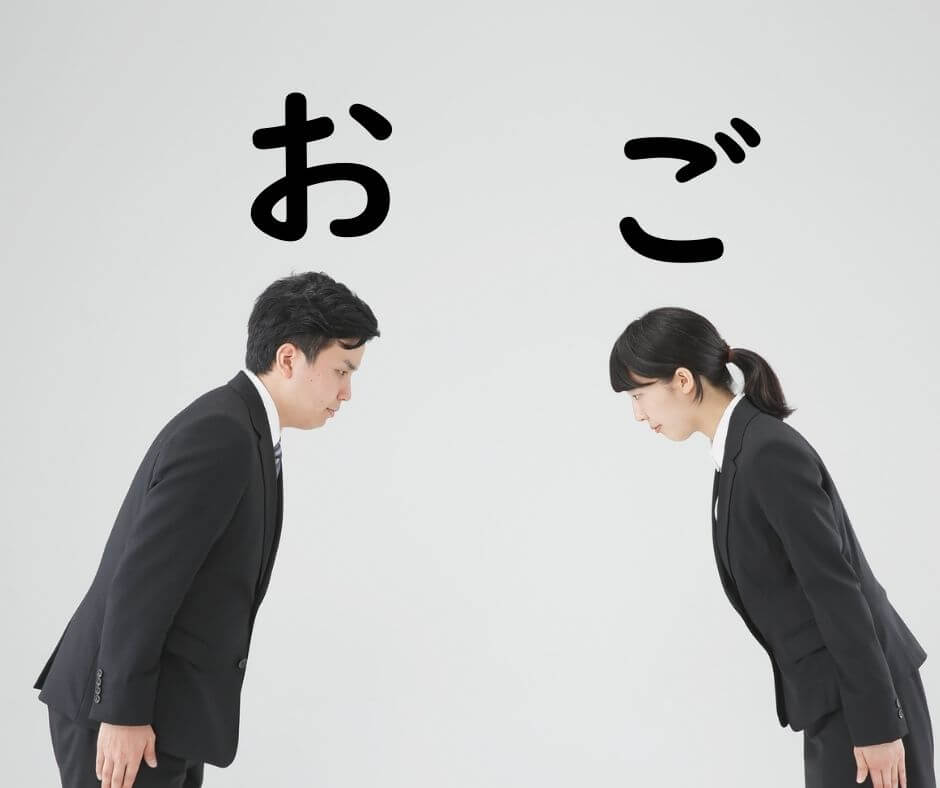
Stop Confusing お〜 and ご〜: Simple Rules for Japanese Honorific Prefixes
Have you seen words like お水(おみず) or ご家族(ごかぞく) and wondered:
✅ “Why is it お sometimes… and ご other times?”
✅ “Is there a rule?”
✅ “Can I use お + anything?”
Good news: there are patterns — and once you learn them, Japanese becomes much more natural and polite!
1) What are お〜 and ご〜?
お〜 and ご〜 are honorific prefixes.
They are added to nouns (and sometimes verbs) to make the word sound:
- more polite
- more respectful
- more refined / “Japanese”
- softer and more friendly in conversation
They are commonly used in:
- customer service
- formal speech
- polite conversations
- talking about someone else’s things
- certain “fixed” common phrases
2) The Basic Rule (The Main Pattern)
✅ お〜 is often used with Japanese-origin words.
These are words that originally come from Japanese (often written in hiragana or simple kanji).
Examples:
- お金(おかね) – money
- お茶(おちゃ) – tea
- お水(おみず) – water
- お名前(おなまえ) – name
- お店(おみせ) – shop
- お皿(おさら) – plate
➡️ These words feel very “Japanese,” so お〜 fits naturally.
✅ ご〜 is often used with Chinese-origin words
These are words that originally come from Chinese and are often:
- two-kanji words
- more formal-sounding
Examples:
- ご家族(ごかぞく) – family
- ご住所(ごじゅうしょ) – address
- ご連絡(ごれんらく) – contact
- ご予約(ごよやく) – reservation
- ご意見(ごいけん) – opinion
- ご利用(ごりよう) – usage
➡️ These sound more “formal,” so ご〜 is common.
3) Easy Shortcut: One-Kanji vs Two-Kanji
This is not a perfect rule, but it helps!
✅ お〜 tends to go with simpler / native words
Often 1 kanji or hiragana words:
- お酒(おさけ)- sake
- お米(おこめ)- rice
- お湯(おゆ)- warm water
✅ ご〜 tends to go with more formal / “Sino-Japanese” words
Often 2+ kanji words:
- ご案内(ごあんない)- guide
- ご説明(ごせつめい)- explanation
- ご質問(ごしつもん)- question
4) Common Words You MUST Memorize (Exceptions)
Japanese has many “fixed polite words” that don’t perfectly follow the pattern.
So it’s best to memorize them as a set.
✅ ご〜 words that are super common
- ご飯(ごはん) – rice / meal
- ご馳走(ごちそう) – feast / treat
- ご覧ください(ごらんください) – please look
Even though 飯 looks “Japanese,” ご飯 is a set phrase and extremely common.
✅ お〜 words that are super common (even with 2 kanji)
- お料理(おりょうり) – cooking / cuisine
- お勉強(おべんきょう) – study (a bit polite/soft)
- お掃除(おそうじ) – cleaning
These are also common polite “everyday” words.
5) お〜 and ご〜 with Verbs (Extra Polite!)
Sometimes お〜 and ご〜 are used with verbs to create polite expressions.
✅ Polite pattern (very common)
お + verb stem + する
お + verb stem + ください
Examples:
- お待ちします
- I will wait
- お待ちください
- Please wait
- お使いになります
- (someone) uses
✅ Another pattern
ご + Chinese origin word + する / ください
Examples:
- ご確認ください
- Please check
- ご利用ください
- Please use
- ご連絡します
- I will contact you
This is extremely common in:
✅ emails
✅ announcements
✅ customer service Japanese
6) When Should YOU Use お〜 and ご〜?
If you’re a Japanese learner, you don’t need to force honorific prefixes everywhere.
But you should use them in certain situations!
✅ Good times to use お / ご
- speaking politely to strangers
- in shops / restaurants
- business emails
- phone calls
- when asking favors politely
Example:
- お名前は何ですか?
- What’s your name?
- ご予約はありますか?
- Do you have a reservation?
- ご住所をお願いします。
- Tell my your address.
7) When NOT to Use お〜 and ご〜
❌ Don’t add it to your own actions too much (especially in formal situations)
If you’re talking about your own things, it can sound unnatural or overly humble.
For example, this sounds a little strange:
- お電話します
- (sometimes okay, but often unnatural in casual settings)
Better:
- ✅ 電話します
- ✅ 後でお電話します
- (this can be natural in business)
❌ Don’t attach it randomly to every noun
Not every word becomes polite with お〜 / ご〜.
For example:
- ❌ おスマホ
- ❌ ごペン
- ❌ おコンビニ
These sound unnatural.
8) Quick Practice Quiz ✅
Choose the correct prefix: お or ご
- ___名前
- ___家族
- ___予約
- ___茶
- ___連絡
- ___金
Answers
- お名前
- ご家族
- ご予約
- お茶
- ご連絡
- お金
9) Natural Example Dialogues
🛍️ At a shop
A: ご予約はありますか?
B: はい、あります。田中です。
A: ありがとうございます。お名前を確認しますね。
A: Do you have a reservation?
B: Yes I do, under my name Tanaka.
A: Thank you. Let me check your name.
📩 In a polite email
ご連絡ありがとうございます。
ご確認のほど、よろしくお願いいたします。
Thank you for contacting me.
Please check it.
Summary: お vs ご in One Simple Chart
✅ お〜 → often Japanese-origin words (everyday, soft, polite)
✅ ご〜 → often Chinese-origin words (formal, business-like)
✅ There are exceptions → memorize common ones!
If you want to learn Japanese, improve your skills, or connect with native speakers and other learners, we can help. We offer one-on-one lessons, a supportive community, and on demand courses.
Website: nihongonana.com
Email: support@nihongonana.com
✅Book 1-on-1 lessons: https://nihongonana.com/lessons/
✅Join our Speaking Club: https://nihongonana.com/community/
✅Join our Course Waitlist: https://nihongonana.com/courses/
Recent Posts
-

Ways to Say “Comfortable”…
April 7, 2026
-

フルーツパーク – Unique Tropical…
April 6, 2026
-

有名 vs 人気 Made…
April 4, 2026
-

在宅勤務 – The Truth…
April 3, 2026
-

The Most Confusing Japanese…
April 2, 2026
Leave Comment