
 October 9, 2025
 No Comments
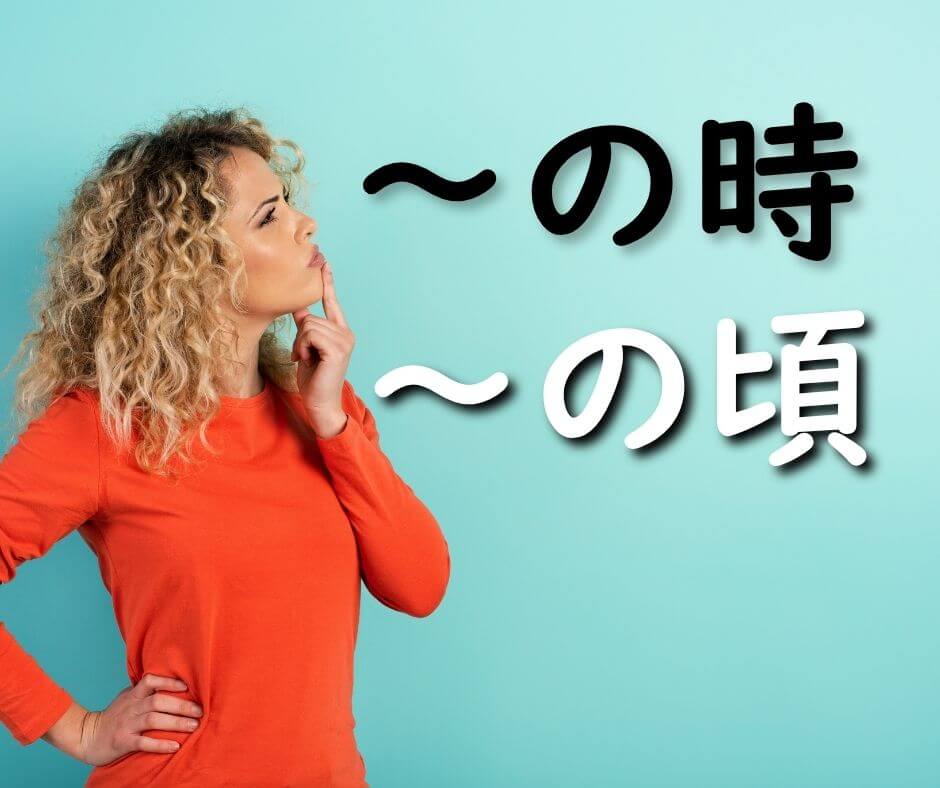
What’s the Difference Between ~の時 and ~の頃?
When you talk about “when something happened” in Japanese, you might wonder which to use — 〜の時(とき) or 〜の頃(ころ).
Both can mean “when” or “around the time,” but they feel slightly different depending on how specific or vague you want to be.
🧩 1. 〜の時= “When / At the time (specific moment)”
Use 〜の時 when you talk about a specific point or event in time.
It often refers to a clear situation — like “when I was 10,” “when I met her,” “when I was in Japan,” etc.
Examples:
- 子どもの時、ピアノをならっていました。
→ When I was a child, I learned piano. - 日本にいる時、毎日ラーメンを食べました。
→ When I was in Japan, I ate ramen every day.
🟣 Key feeling: clear and specific — you can almost “point” to that moment.
🌤 2. 〜の頃(ころ)= “Around the time / Around when (period of time)”
Use 〜の頃 when you talk about an approximate period — a broader, more nostalgic time frame.
It’s often used when remembering your childhood, student days, or “around that time” in general.
Examples:
- 学生の頃、よくカフェで勉強していました。
→ Around my student days, I often studied in cafés. - 夏の頃はいつも海に行きます。
→ Around summer, I always go to the beach.
🟢 Key feeling: general or nostalgic — like looking back on an “era” or “phase.”
🧠 3. Comparing 〜の時 vs 〜の頃
| Expression | Focus | Time feeling | Common use |
|---|---|---|---|
| ~の時 (とき) | Specific moment or event | Exact | When I was in Japan, when I met her |
| ~の頃 (ころ) | Period or phase | Approximate / nostalgic | When I was a student, around summer time |
💬 4. Example Comparison
| English | Japanese (with nuance) |
|---|---|
| When I was in Japan, I met many friends. | 日本にいる時、たくさん友だちができました。 |
| Around the time I lived in Japan, I was really happy. | 日本に住んでいた頃は、とても幸せでした。 |
→ The first one (時 – とき) focuses on a specific event — when you were there.
→ The second one (頃 – ころ) focuses on a whole period — that phase of life.
🗝️ 5. Quick Tips to Remember
✅ Use 時(とき) when you can answer “when exactly?”
✅ Use 頃(ころ) when you mean “around that time.”
✅ Both can connect to nouns, verbs, or adjectives:
✍️ 6. Practice
Try making your own sentences!
Fill in the blanks with 時(とき) or 頃(ころ).
- 子どもの( )、アニメをよく見ました。
- 夏の( )、毎日アイスを食べました。
- 日本にいる( )、京都に行きました。
- 高校生の( )、サッカー部に入っていました。
- 忙しい( )、よくコンビニでごはんを買いました。
- 冬の( )、スキーをしに行きます。
- コロナの( )、家で映画ばかり見ていました。
- 小学生の( )、先生がとてもこわかったです。
- 日本語を勉強し始めた( )、ひらがなを覚えるのが大変でした。
- 子どもが生まれた( )、毎日が新しい発見でした。
🧭 7. Summary
Both 〜の時(とき) and 〜の頃(ころ) talk about “when,”
but 〜の時(とき) is for specific moments,
while 〜の頃(ころ) is for general periods or nostalgic times.
Mastering this difference helps your Japanese sound more natural and expressive!
If you want to learn Japanese, improve your skills, or connect with native speakers and other learners, we can help. We offer one-on-one lessons, a supportive community, and on demand courses.
Website: nihongonana.com
Email: support@nihongonana.com
✅Book 1-on-1 lessons: https://nihongonana.com/lessons/
✅Join our Speaking Club: https://nihongonana.com/community/
✅Join our Course Waitlist: https://nihongonana.com/courses/
Recent Posts
-

いちご狩り: Ultimate Hidden Spot…
March 17, 2026
-
Getting to Know Japan:…
March 16, 2026
-

The Simple Trick to…
March 14, 2026
-

The Hidden World of…
March 13, 2026
-

No More Confusion :…
March 12, 2026
Leave Comment