
 August 7, 2025
 No Comments
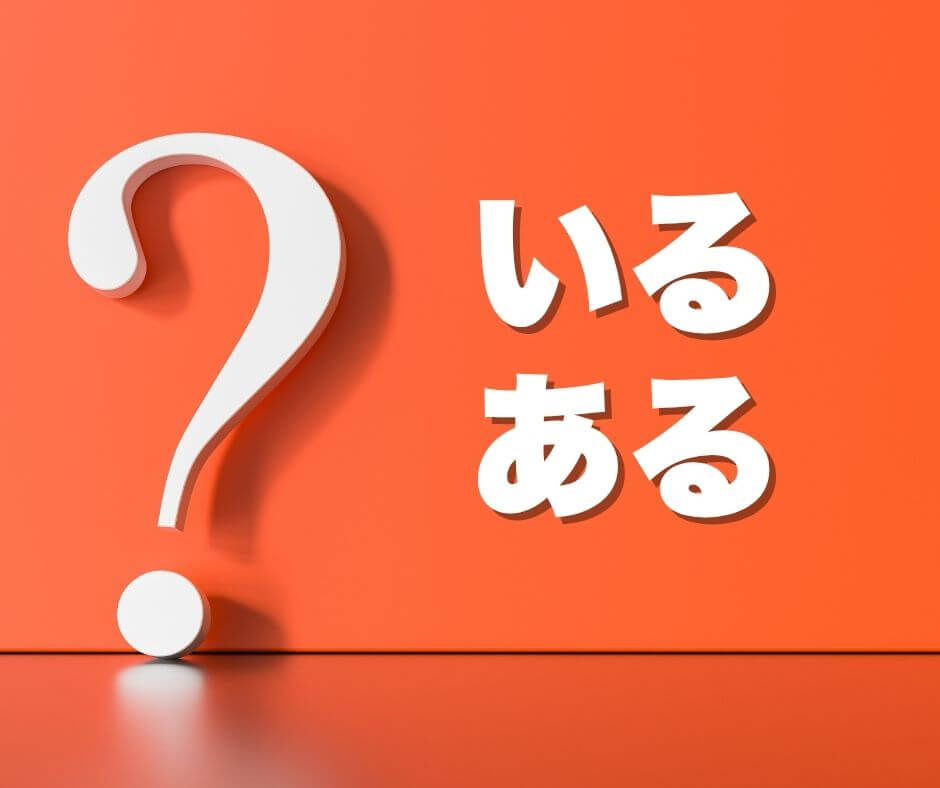
いる vs ある in Japanese… which one to use?
If you’ve ever said something like「ほんはいます」(hon wa imasu), you’re not alone! This is a common mistake among Japanese learners. In Japanese, different verbs are used to say “there is” or “to exist” depending on whether the thing is living or non-living.
Let’s break down the difference between いる (iru) and ある (aru) so you can use them naturally and correctly!
いる = for Living Things
Use いる for people, animals, and other living things that move on their own.
Examples:
- 犬がいます。
There is a dog. - 友だちがいます。
I have a friend. / There is a friend. - 子どもがいますか?
Do you have kids?
📝 Note: いる becomes います in polite form.
🪑 ある = for Non-living Things
Use ある for objects, places, and plants (yes, plants don’t move, so they count as non-living in this case).
Examples:
- テーブルがあります。
There is a table. - お金があります。
I have money. - コンビニが駅の前にあります。
There’s a convenience store in front of the station.
📝 Note: ある becomes あります in polite form.
まとめ(Summary)
| Verb | Use For | Polite Form |
|---|---|---|
| いる | People, animals | います |
| ある | Things, places, plants | あります |
Common Mistakes
❌ 猫があります。
✅ 猫がいます。
(Cats are animals, so use いる!)
❌ 本がいます。
✅ 本があります。
(Books are things, so use ある!)
📝 Example Sentences
Here are 5 more example sentences using both いる and ある:
- きょうしつに学生がいます。
There are students in the classroom. - 机の上にノートがあります。
There is a notebook on the desk. - 公園に犬がいます。
There’s a dog in the park. - 冷蔵庫の中にりんごがあります。
There’s an apple in the fridge. - あそこにねこがいますよ!
There’s a cat over there!
Try reading them out loud to get used to the natural flow! 🎧
🗣️ Practice Time
Try to guess which verb is correct: いる or ある?
(Answers below!)
- 木が__。
- 先生が__。
- パソコンが__。
- 鳥が__。
- 学校が__。
✅ Answers:
- ある(plants = non-living)
- いる(a person)
- ある(thing)
- いる(animal)
- ある(place)
🎯 Quick Tips
- If it breathes or moves by itself, use いる.
- If it’s an object or place, use ある.
- When in doubt, ask: “Is this alive?” 😄
🧩 Bonus Phrase
- だれかいますか?
Is someone there? - なにもありません。
There’s nothing.
These are great phrases to recognize in everyday conversation!
Ready to practice more with いる and ある? Try writing 5 sentences using each and check if you used them correctly!
If you want to learn Japanese, improve your skills, or connect with native speakers and other learners, we can help. We offer one-on-one lessons, a supportive community, and on demand courses.
Website: nihongonana.com
Email: support@nihongonana.com
✅Book 1-on-1 lessons: https://nihongonana.com/lessons/
✅Join our Speaking Club: https://nihongonana.com/community/
✅Join our Course Waitlist: https://nihongonana.com/courses/
Recent Posts
-

Ways to Say “Comfortable”…
April 7, 2026
-

フルーツパーク – Unique Tropical…
April 6, 2026
-

有名 vs 人気 Made…
April 4, 2026
-

在宅勤務 – The Truth…
April 3, 2026
-

The Most Confusing Japanese…
April 2, 2026
Leave Comment