
 September 13, 2026
 No Comments
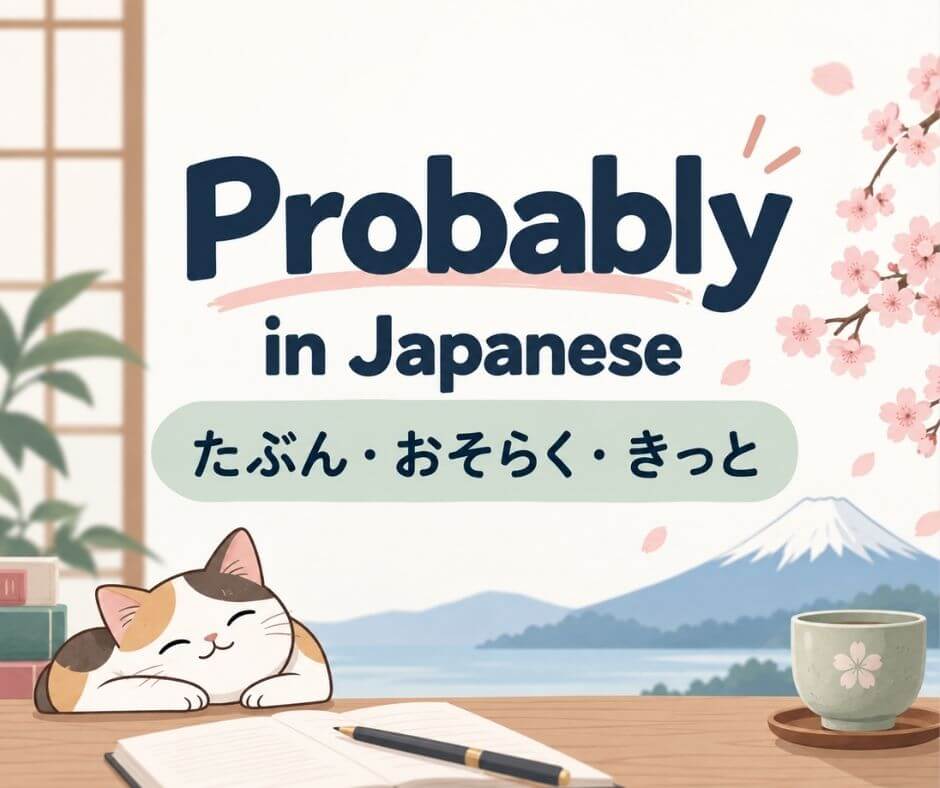
How to Say “Probably” in Japanese: たぶん・おそらく・きっと
How do you say “probably” in Japanese?
One of the first words many Japanese learners learn is たぶん. But Japanese also has words like おそらく and きっと.
They can sometimes appear in similar situations, but the speaker’s confidence and the formality of the situation are different.
Let’s look at the differences! 😊
1. たぶん — Probably / Maybe
たぶん is the most common and casual way to say “probably.”
You use it when you think something is likely, but you are not completely sure.
It is very common in everyday conversation.
Examples
たぶん明日は雨が降ります。
Probably, it will rain tomorrow.
たぶん彼は来ないと思います。
I think he probably won’t come.
A: 明日のパーティーに行く?
Are you going to the party tomorrow?
B: うん、たぶん行く。
Yeah, probably.
You will hear たぶん all the time in casual Japanese conversations.
💡 It can sometimes feel similar to “maybe”, depending on the speaker’s confidence.
2. おそらく — Probably / Most Likely
おそらく also means “probably” or “most likely.”
However, it sounds more formal and serious than たぶん.
You may hear it in:
- News reports
- Business situations
- Formal explanations
- Predictions or analysis
Examples
おそらく台風は明日の朝、東京に近づくでしょう。
The typhoon will probably approach Tokyo tomorrow morning.
おそらくこの問題を解決するには時間がかかります。
It will probably take time to solve this problem.
おそらく彼が一番詳しいでしょう。
He is probably the most knowledgeable about it.
In casual conversation with friends, たぶん usually sounds more natural.
Compare:
たぶん明日は忙しい。
I’ll probably be busy tomorrow.
おそらく明日は忙しいでしょう。
I will most likely be busy tomorrow.
The second sentence sounds much more formal.
3. きっと — Surely / I’m Sure / Probably
きっと is a little different.
It shows that the speaker has a strong expectation or belief that something will happen.
Because of this, it can be translated as:
“surely,” “I’m sure,” “probably,” or sometimes “definitely.”
Examples
彼はきっと来ます。
I’m sure he’ll come.
明日はきっと晴れますよ。
I’m sure it’ll be sunny tomorrow.
日本語はきっと上手になります!
I’m sure your Japanese will improve!
Compared with たぶん, きっと sounds much more confident.
Compare these two:
たぶん彼は来る。
He’ll probably come.
きっと彼は来る。
I’m sure he’ll come.
With たぶん, you think he will come, but you’re not sure.
With きっと, you strongly believe that he will come.
たぶん vs おそらく vs きっと
Here is a simple way to remember the difference:
| Word | Meaning | Confidence | Style |
|---|---|---|---|
| たぶん | probably / maybe | Medium | Casual / Neutral |
| おそらく | probably / most likely | Medium–High | Formal |
| きっと | surely / I’m sure | High | Neutral |
The exact level of confidence depends on the situation, so think of this table as a general guide rather than a strict rule.
Compare Them in the Same Situation
Imagine your friend asks:
田中さんはパーティーに来ますか?
Is Tanaka-san coming to the party?
たぶん来ます。
He’ll probably come.
→ You think he will come, but you’re not completely sure.
おそらく来るでしょう。
He will most likely come.
→ Similar meaning, but more formal or analytical.
きっと来ます。
I’m sure he’ll come.
→ You strongly believe he will come.
The vocabulary you choose can slightly change how confident you sound!
A Useful Grammar Tip
たぶん is often used with expressions that show uncertainty, such as:
~と思う
I think…
~かもしれない
might / maybe
~でしょう / ~だろう
probably / I suppose
For example:
たぶん大丈夫だと思います。
I think it’ll probably be okay.
たぶん明日は雨かもしれません。
It might rain tomorrow.
おそらく also commonly appears with でしょう / だろう.
おそらく来週には終わるでしょう。
It will probably be finished by next week.
きっと, on the other hand, is often used when the speaker wants to express confidence, hope, or encouragement.
きっとうまくいきますよ!
I’m sure it’ll go well!
Which One Should You Use?
For normal everyday conversations, たぶん is the safest and most useful choice.
Use おそらく when you want to sound more formal or when making a serious prediction.
Use きっと when you have a stronger belief or expectation about what will happen.
So remember:
たぶん → Probably 🤔
おそらく → Most likely 🧐
きっと → I’m sure! 💪
Once you understand the speaker’s level of confidence, choosing between these three words becomes much easier!
If you want to learn Japanese, improve your skills, or connect with native speakers and other learners, we can help. We offer one-on-one lessons and a supportive community!
Website: nihongonana.com
Email: support@nihongonana.com
✅Private Lesson: NihongoNana Private Lessons
✅Online Community: NihongoNana Community
Recent Posts
-
A Beautiful Day in…
September 14, 2026
-

How to Say “Probably”…
September 13, 2026
-

Japanese Spider Lily: A…
September 11, 2026
-

Difference Between 思う and…
September 10, 2026
-

Pets in Japan: Popular…
September 9, 2026
Leave Comment