

 June 6, 2026
 No Comments
This is How to Avoid Mixing Up 嫌い and 嫌 in Japanese
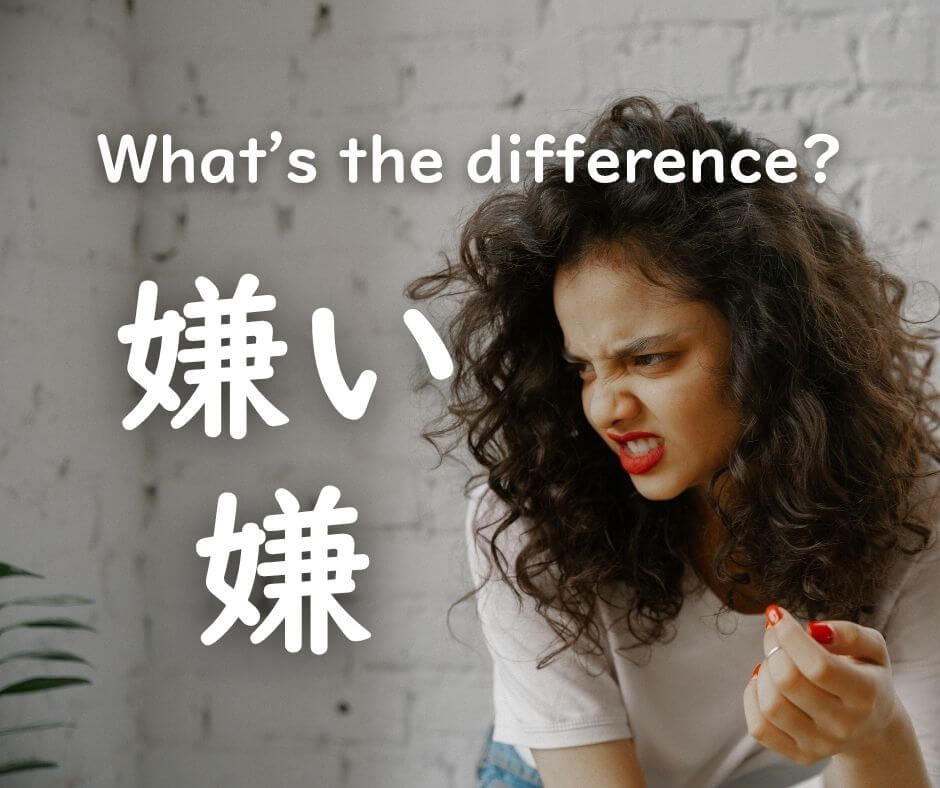
If you have been learning Japanese for a while, you have probably come across both 嫌い(きらい) and 嫌(いや). Since both words can be translated as “dislike” or “hate,” many learners assume they mean the same thing. However, they are used differently and express different feelings.
One reason learners get confused is that there are situations where both can be used, but the nuance changes. Understanding this difference will help your Japanese sound much more natural.
What Does 嫌い Mean?
嫌い(きらい) is a na-adjective that expresses dislike toward something or someone. It is often used when talking about personal preferences.
Examples
私は納豆が嫌いです。
I dislike natto.
彼は虫が嫌いです。
He dislikes insects.
子どものとき、野菜が嫌いでした。
When I was a child, I disliked vegetables.
Nuance
嫌(きら)い is often used to describe things you generally do not like.
For example:
- Foods
- Animals
- Activities
- Hobbies
- Certain types of people
It sounds similar to saying:
- “I don’t like it.”
- “It’s not my thing.”
It does not always sound as strong as the English word “hate.”
What Does 嫌 Mean?
嫌(いや) expresses a feeling of unpleasantness, reluctance, or resistance. It is often used when something feels uncomfortable, annoying, or undesirable.
Examples
今日は仕事に行くのが嫌です。
I don’t want to go to work today.
待つのは嫌です。
I don’t like waiting.
そんな話は嫌です。
I don’t want to hear that kind of story.
Nuance
嫌(いや) focuses more on your emotional reaction to a situation rather than a general preference.
It often means:
- I don’t want to.
- I don’t feel comfortable with that.
- That’s unpleasant.
- I’d rather not.
Comparing 嫌い and 嫌
Let’s compare them with similar situations.
Food
私はピーマンが嫌いです。
I dislike green peppers.
△ 私はピーマンが嫌です。
Since this is a general preference, 嫌(きら)い is more natural.
Situation
雨の日に出かけるのは嫌です。
I don’t like going out on rainy days.
Here, the speaker is talking about an unpleasant situation, so 嫌(いや) is more natural.
People
彼が嫌いです。
I dislike him.
彼と話すのは嫌です。
I don’t want to talk with him.
The first sentence expresses dislike toward the person.
The second sentence focuses on the unpleasant action of talking to him.
Can 嫌い and 嫌 Be Used Interchangeably?
Sometimes, yes. However, even when both are possible, the nuance is usually different.
Example 1
彼が嫌いです。
I dislike him.
彼は嫌です。
I don’t want him around / He makes me uncomfortable.
Both are negative, but:
- 嫌(きら)い = I have a negative opinion or dislike toward him.
- 嫌(いや) = His presence or involvement feels unpleasant to me.
Example 2
勉強が嫌いです。
I dislike studying.
勉強は嫌です。
I don’t want to study.
The first sentence describes a general preference.
The second sentence describes reluctance toward the activity.
Example 3
野菜が嫌いです。
I don’t like vegetables.
野菜は嫌です。
Vegetables are unpleasant to me / I don’t want vegetables.
This is why children often say:
野菜は嫌だ!
I don’t want vegetables!
rather than making a general statement about their preferences.
When They Are NOT Interchangeable
General Preferences
ピーマンが嫌いです。
I dislike green peppers.
△ ピーマンが嫌です。
When talking about a food preference, 嫌(きら)い is much more natural.
Situations and Actions
仕事が嫌いです。
I dislike my job / I dislike working.
仕事に行くのが嫌です。
I don’t want to go to work.
The first sentence describes a general dislike.
The second sentence focuses on an unpleasant situation.
Common Expressions with 嫌
嫌(いや)だ
もう嫌だ!
I’ve had enough!
This expression is very common in casual speech.
嫌(いや)になる
勉強が難しくて嫌になりました。
Studying became so difficult that I got fed up with it.
嫌(いや)がる
子どもが野菜を食べるのを嫌がっています。
The child is reluctant to eat vegetables.
Quick Summary
| 嫌(きら)い | 嫌(いや) |
|---|---|
| General dislike or preference | Feeling that something is unpleasant |
| Usually about people, food, hobbies, things | Usually about situations, actions, or experiences |
| “I don’t like it” | “I don’t want to” / “I dislike this situation” |
| Noun + が嫌(きら)い | Verb dictionary form + のが嫌(いや) |
Simple Rule
If you are talking about something you generally dislike, use 嫌(きら)い.
If you are talking about a situation, action, or experience that feels unpleasant, use 嫌(いや).
A simple way to remember the difference is:
嫌(きら)い = preference
“I don’t like X.”
嫌(いや) = feeling
“I don’t want X.” / “X is unpleasant.”
Compare One Last Time
犬が嫌いです。
I dislike dogs.
犬に追いかけられるのは嫌です。
I don’t want to be chased by a dog.
The first sentence is about a general preference.
The second sentence is about an unpleasant experience.
Understanding this distinction will help you express your feelings more naturally and avoid one of the most common mistakes Japanese learners make.
If you want to learn Japanese, improve your skills, or connect with native speakers and other learners, we can help. We offer one-on-one lessons and a supportive community!
Website: nihongonana.com
Email: support@nihongonana.com
✅Private Lesson: NihongoNana Private Lessons
✅Online Community: NihongoNana Community
Recent Posts
-

Japanese School System and…
October 12, 2026
-

6 Beautiful Japanese Phrases…
October 10, 2026
-

The Japanese Custom That…
October 9, 2026
-

How to Say “Maybe”…
October 8, 2026
-

The Fascinating World of…
October 7, 2026
Leave Comment