
 September 17, 2025
 No Comments
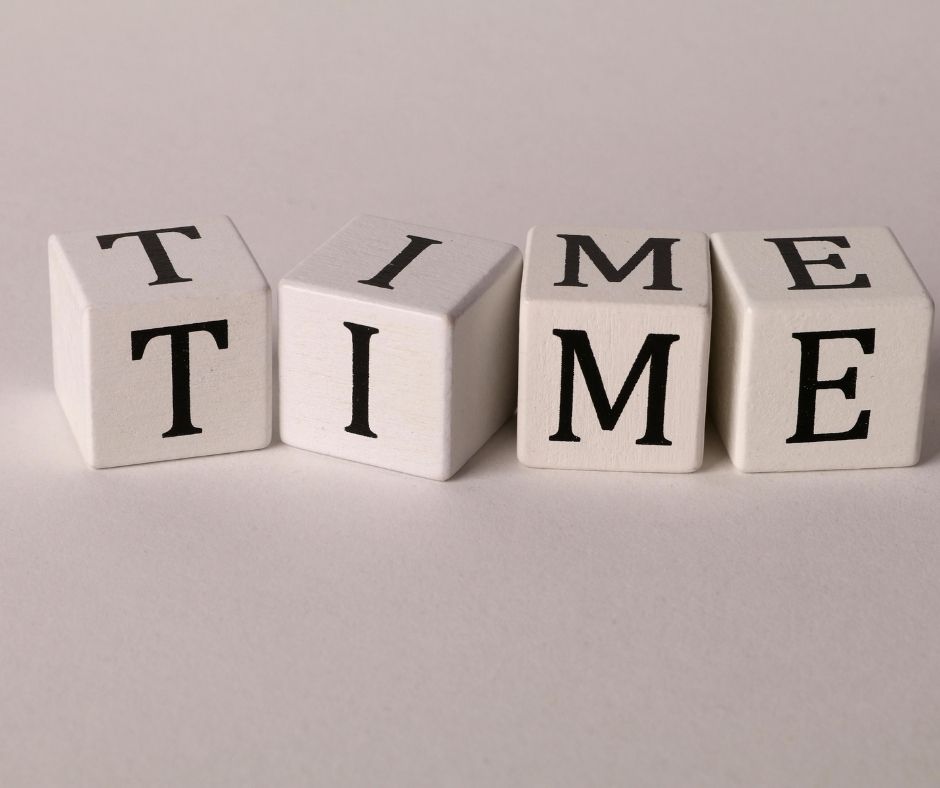
Useful Japanese Expressions with “Time”
When learning Japanese, you probably start with simple words like 今 (now), 明日 (tomorrow), and 来週 (next week). But Japanese has many subtle time expressions that don’t translate neatly into English. These words and phrases add nuance to everyday conversations—helping you sound natural, polite, and precise.
Let’s explore some of the most useful ones!
1. 早めに – “A little earlier / Sooner than usual”
This phrase suggests doing something earlier than expected—often as a polite or cautious recommendation.
Example:
早めに来てください。
Please come a little earlier.
2. 遅くとも – “At the latest”
Used to set a firm deadline. It emphasizes that something must happen no later than a certain time.
Example:
遅くとも5時までに来てください。
Please come by 5 o’clock at the latest.
3. 今にも – “At any moment”
Describes something that feels like it’s just about to happen.
Example:
空が暗くなって、今にも雨が降りそうだ。
The sky is dark—it looks like it’s going to rain at any moment.
4. たった今 – “Just now”
Refers to something that literally just happened.
Example:
彼はたった今帰ったところです。
He just went home.
5. そのうち – “Soon / Eventually (but not immediately)”
A vague way to say something will happen “sometime,” often casually among friends.
Example:
そのうち遊びに行きましょう。
Let’s hang out sometime.
6. いずれ – “Someday / Sooner or later”
A slightly more formal cousin of そのうち, used when talking about the future with some certainty.
Example:
いずれ分かるでしょう。
You’ll understand someday.
7. しばらく – “For a while / In a little while”
This flexible word can mean both “for some time” and “in a short while,” depending on context.
Example:
しばらくここで待っていてください。
Please wait here for a while.
8. ついに – “Finally / At last”
Used when something long-awaited or difficult has finally happened.
Example:
ついに夢がかなった。
My dream finally came true.
9. やがて – “Before long / Eventually”
Refers to something that will happen in the near future, often naturally or inevitably.
Example:
やがて春が来る。
Spring will come before long.
10. ずっと – “For a long time / Continuously”
This word can mean all the time without stopping or for a long duration. It’s also used for comparisons (“much more”).
Example:
彼をずっと待っていた。
I had been waiting for him for a long time.
Final Thoughts
Japanese time expressions are more than just vocabulary—they reflect nuance and perspective. Saying 早めに instead of simply 早く makes your speech softer and more considerate. Using そのうち instead of giving a fixed time makes your promise sound casual (and maybe a little vague!).
By mastering phrases like 遅くとも, 今にも, and ずっと, you’ll be able to express not just when something happens, but how it feels in time.
👉 Next time you talk about plans, waiting, or future hopes in Japanese, try slipping in one of these expressions—you’ll sound much more natural!.
If you want to learn Japanese, improve your skills, or connect with native speakers and other learners, we can help. We offer one-on-one lessons, a supportive community, and on demand courses.
Website: nihongonana.com
Email: support@nihongonana.com
✅Book 1-on-1 lessons: https://nihongonana.com/lessons/
✅Join our Speaking Club: https://nihongonana.com/community/
✅Join our Course Waitlist: https://nihongonana.com/courses/
Recent Posts
-

Japanese School System and…
October 12, 2026
-

6 Beautiful Japanese Phrases…
October 10, 2026
-

The Japanese Custom That…
October 9, 2026
-

How to Say “Maybe”…
October 8, 2026
-

The Fascinating World of…
October 7, 2026
Leave Comment