

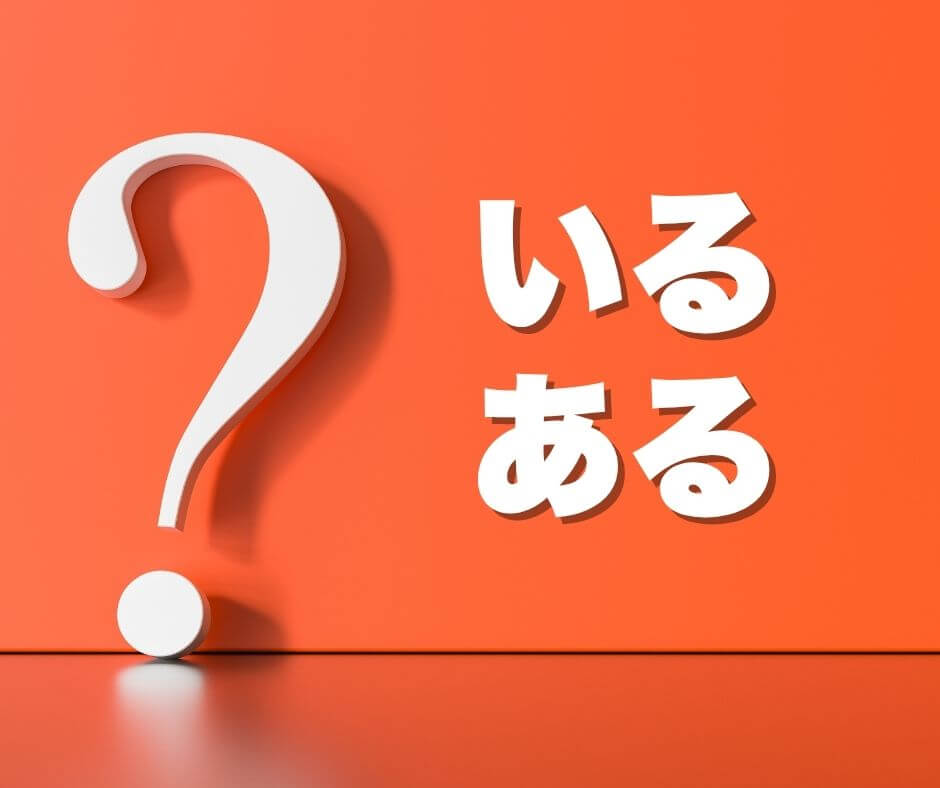
If you’ve ever said something like「ほんはいます」(hon wa imasu), you’re not alone! This is a common mistake among Japanese learners. In Japanese, different verbs are used to say “there is” or “to exist” depending on whether the thing is living or non-living.
Let’s break down the difference between いる (iru) and ある (aru) so you can use them naturally and correctly!
いる = for Living Things
Use いる for people, animals, and other living things that move on their own.
Examples:
- 犬がいます。
There is a dog. - 友だちがいます。
I have a friend. / There is a friend. - 子どもがいますか?
Do you have kids?
📝 Note: いる becomes います in polite form.
🪑 ある = for Non-living Things
Use ある for objects, places, and plants (yes, plants don’t move, so they count as non-living in this case).
Examples:
- テーブルがあります。
There is a table. - お金があります。
I have money. - コンビニが駅の前にあります。
There’s a convenience store in front of the station.
📝 Note: ある becomes あります in polite form.
まとめ(Summary)
| Verb | Use For | Polite Form |
|---|---|---|
| いる | People, animals | います |
| ある | Things, places, plants | あります |
Common Mistakes
❌ 猫があります。
✅ 猫がいます。
(Cats are animals, so use いる!)
❌ 本がいます。
✅ 本があります。
(Books are things, so use ある!)
📝 Example Sentences
Here are 5 more example sentences using both いる and ある:
- きょうしつに学生がいます。
There are students in the classroom. - 机の上にノートがあります。
There is a notebook on the desk. - 公園に犬がいます。
There’s a dog in the park. - 冷蔵庫の中にりんごがあります。
There’s an apple in the fridge. - あそこにねこがいますよ!
There’s a cat over there!
Try reading them out loud to get used to the natural flow! 🎧
🗣️ Practice Time
Try to guess which verb is correct: いる or ある?
(Answers below!)
- 木が__。
- 先生が__。
- パソコンが__。
- 鳥が__。
- 学校が__。
✅ Answers:
- ある(plants = non-living)
- いる(a person)
- ある(thing)
- いる(animal)
- ある(place)
🎯 Quick Tips
- If it breathes or moves by itself, use いる.
- If it’s an object or place, use ある.
- When in doubt, ask: “Is this alive?” 😄
🧩 Bonus Phrase
- だれかいますか?
Is someone there? - なにもありません。
There’s nothing.
These are great phrases to recognize in everyday conversation!
Ready to practice more with いる and ある? Try writing 5 sentences using each and check if you used them correctly!