

 August 24, 2026
 No Comments
Confusing Japanese Kanji Made Easy: JLPT N5 Beginner’s Guide
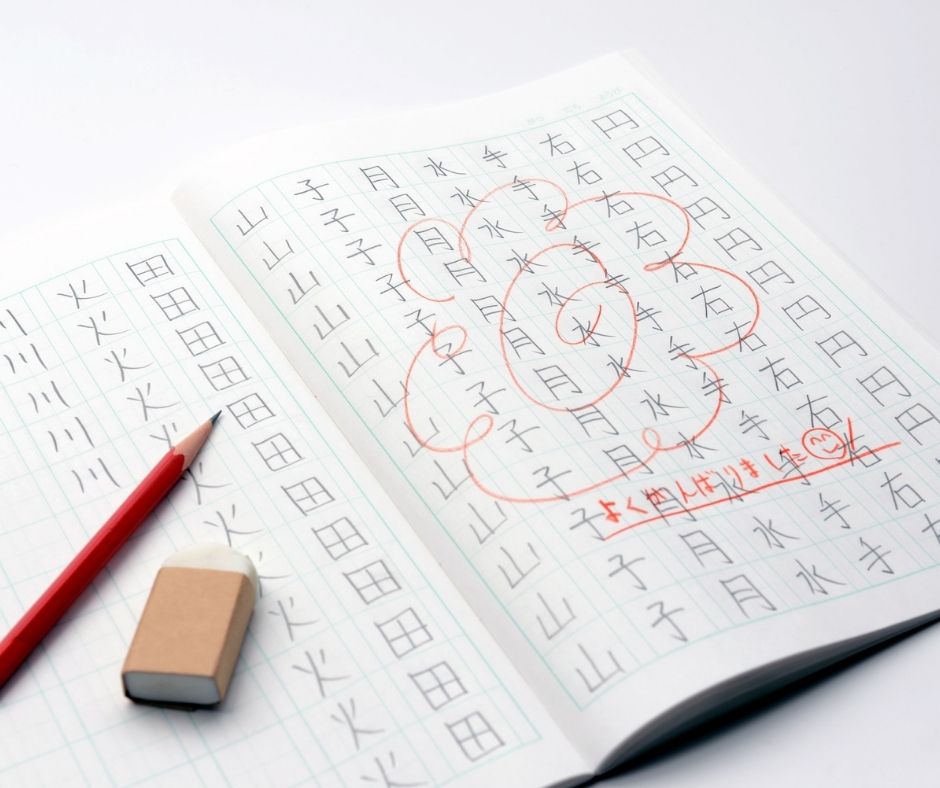
Japanese kanji can sometimes be confusing—especially when several characters look almost the same! 👀
A small extra line, dot, or change in position can completely change the meaning.
In this guide, we’ll compare five groups of similar-looking JLPT N5 kanji to help you spot the differences more easily!
1. 木 vs 本
木 — Tree
Meaning: tree / wood
木 looks like a simple tree with branches and roots. 🌳
Example:
木があります。
→ There is a tree.
本 — Book
Meaning: book
本 is very similar to 木, but it has one extra line near the bottom.
木 → tree 🌳
本 → tree + a line at the base
That extra line originally represents the root or base of the tree.
Example:
本を読みます。
→ I read a book.
💡 Easy Tip
Look at the bottom:
木 = no extra line
本 = extra line
2. 休 vs 体
休 — Rest
Meaning: rest
休 is made up of:
人 (person) + 木 (tree)
Imagine a person leaning against a tree and taking a rest. 🌳😴
Example:
少し休みます。
→ I’ll rest for a little while.
体 — Body
Meaning: body
体 looks similar to 休, but the right side is different:
休 = 人 + 木
体 = 人 + 本
Example:
体は大切です。
→ The body is important.
💡 Easy Tip
The difference is on the right:
休 → 木
体 → 本
So, look for the extra line!
3. 大 vs 太 vs 犬
These three kanji are especially easy to mix up! The main thing to watch is the dot.
大 — Big
Meaning: big / large
大 has no dot.
Example:
大きいです。
→ It’s big.
太 — Thick / Fat
Meaning: thick / fat
太 is 大 with a dot inside.
Example:
このペンは太いです。
→ This pen is thick.
犬 — Dog
Meaning: dog
犬 also has a dot, but the dot is in a different position.
🐶 Think of the dot as part of the dog’s shape—or even a little tail!
Example:
犬がいます。
→ There is a dog.
💡 Easy Tip
大 = no dot
太 = dot inside
犬 = dot on the upper right
4. 白 vs 百
白 — White
Meaning: white
Example:
白い猫です。
→ It’s a white cat.
百 — One Hundred
Meaning: 100
These kanji look similar, but check the top!
白 starts with a short stroke.
百 has 一 at the top.
Example:
百円です。
→ It’s 100 yen.
💡 Easy Tip
白 = white
百 = starts with 一 and means 100
5. 石 vs 右
石 — Stone
Meaning: stone / rock
🪨
Example:
大きい石があります。
→ There is a big stone.
右 — Right
Meaning: right
👉
Example:
右に曲がってください。
→ Please turn right.
💡 Easy Tip
Both kanji have 口 at the bottom, so look carefully at the top!
石 has a more horizontal shape at the top.
右 has a different stroke shape.
Practice writing them side by side to notice the difference more easily.
One Small Difference Can Change Everything!
When learning kanji, don’t just look at the overall shape. Pay attention to the small details! 👀
A single extra line can change 木 into 本. A dot can turn 大 into 太 or 犬. Even changing one stroke can create a completely different kanji.
Compare similar kanji side by side, and those confusing characters will gradually become much easier to recognize! 🌸
If you want to learn Japanese, improve your skills, or connect with native speakers and other learners, we can help. We offer one-on-one lessons and a supportive community!
Website: nihongonana.com
Email: support@nihongonana.com
✅Private Lesson: NihongoNana Private Lessons
✅Online Community: NihongoNana Community
Recent Posts
-
Shopping at MUJI Japan:…
October 14, 2026
-

Japanese School System and…
October 12, 2026
-

6 Beautiful Japanese Phrases…
October 10, 2026
-
The Japanese Custom That…
October 9, 2026
-

How to Say “Maybe”…
October 8, 2026
Leave Comment