

 July 9, 2026
 No Comments
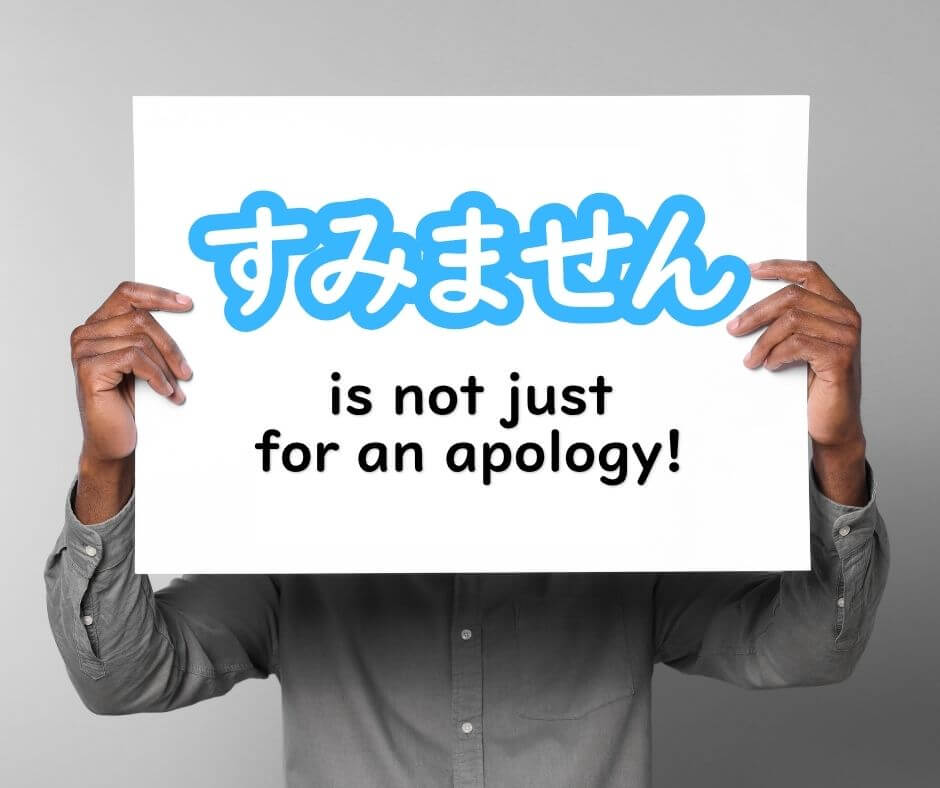
Hidden Meanings of すみません Every Japanese Learner Should Know
If you’ve been studying Japanese for a while, you’ve probably heard すみません countless times. Many textbooks translate it simply as “I’m sorry.” However, if you visit Japan, you’ll quickly notice that people use it in many situations where they aren’t apologizing at all.
In fact, すみません is one of the most useful and versatile expressions in Japanese. It can mean “I’m sorry,” “Excuse me,” “Thank you,” or even “May I have your attention?” depending on the situation.
Let’s learn how native speakers actually use すみません!
What Does すみません Mean?
The core feeling behind すみません is:
“I’m sorry for causing you trouble or inconvenience.”
Because of this, the expression naturally expanded into several everyday uses.
Think of it as saying:
- Sorry
- Excuse me
- Thank you for the trouble
- Pardon me
The exact meaning depends entirely on the context.
1. Apologizing (I’m Sorry)
This is the meaning most learners know.
Use すみません when you made a small mistake or inconvenienced someone.
Examples
遅れてすみません。
I’m sorry I’m late.
本当にすみませんでした。
I’m really sorry.
ご迷惑をおかけしてすみません。
I’m sorry for causing you trouble.
💡 For serious apologies, Japanese people often use more formal expressions such as:
- 申し訳ありません
- 大変申し訳ございません
2. Getting Someone’s Attention (Excuse Me)
One of the most common uses!
Instead of saying “Hey!” or calling someone loudly, Japanese people usually say すみません.
Examples
すみません、駅はどこですか。
Excuse me, where is the station?
すみません、写真を撮ってもらえますか。
Excuse me, could you take a picture for me?
すみません。
Excuse me.
This is probably the first phrase you’ll use when traveling in Japan.
3. Calling Staff at Restaurants or Stores
Need to order? Need more water? Need the bill?
Just say:
すみません!
This is completely natural.
Examples
すみません、注文お願いします。
Excuse me, I’d like to order.
すみません、お水をください。
Excuse me, may I have some water?
すみません、お会計お願いします。
Excuse me, the bill, please.
4. Saying Thank You
This surprises many learners.
Japanese people sometimes use すみません instead of ありがとう.
Why?
Because they feel that the other person went through some trouble to help them.
The feeling is closer to:
“I’m sorry you had to do that for me… and thank you.”
Examples
Someone picks up something you dropped.
すみません!
Someone holds the elevator.
すみません!
Someone explains something carefully.
すみません、助かりました。
Thank you—that really helped.
Notice that this doesn’t sound like an apology. It’s actually expressing gratitude while acknowledging the other person’s effort.
5. Squeezing Past Someone (Pardon Me)
If you’re walking through a crowded train or trying to get by someone, すみません is the natural phrase.
Examples
すみません、通ります。
Excuse me, coming through.
ちょっとすみません。
Excuse me.
You’ll hear this constantly during rush hour in Japan.
How Is It Different from ごめんなさい?
Many learners wonder:
Can I always replace すみません with ごめんなさい?
Not really.
| すみません | ごめんなさい |
|---|---|
| Sorry | Sorry |
| Excuse me | ❌ |
| Getting attention | ❌ |
| Thank you | ❌ |
| Calling staff | ❌ |
| More versatile | Mainly an apology |
ごめんなさい is mainly used when apologizing.
すみません is much more flexible and is used throughout daily life.
How Is It Different from ありがとう?
Both can sometimes be used after someone helps you.
Imagine someone carries your heavy suitcase.
You could say:
ありがとうございます。
Thank you.
or
すみません。
Sorry for making you go through the trouble—and thank you.
The difference is subtle.
- ありがとうございます focuses on gratitude.
- すみません focuses on the inconvenience you caused the other person.
Sometimes Japanese people even combine them.
Example
すみません、ありがとうございます!
Thank you so much!
Casual Versions
Depending on who you’re talking to, you may hear shorter versions.
| Expression | Situation |
|---|---|
| すみません | Polite (most common) |
| すみませんでした | Polite apology for something happened in the past |
| ごめんね | Softer, friendly |
| すいません | Casual spoken pronunciation |
| すまない | Casual used by men (often used in anime, tv drama) |
| すまん | Very casual used by men (often used in anime, tv drama) |
💡 すいません is extremely common in everyday conversation. Although it comes from すみません, many native speakers pronounce it this way in casual speech.
Common Beginner Mistakes
❌ Using ごめんなさい to call a waiter
Instead say:
すみません!
❌ Thinking すみません always means “I’m sorry”
Context is everything.
Depending on the situation, it could mean:
- Excuse me
- Thank you
- Sorry
- Pardon me
❌ Avoiding すみません because you’re not apologizing
Native speakers use it constantly—even when they aren’t apologizing.
Don’t be surprised if someone helps you and immediately says すみません!
Quick Summary
すみません is one of the most important everyday expressions in Japanese.
You can use it to:
✅ Apologize for small mistakes
✅ Get someone’s attention
✅ Call restaurant or store staff
✅ Thank someone who helped you
✅ Squeeze past people politely
Instead of memorizing a single English translation, try thinking of すみません as expressing consideration for the other person. That’s why it works in so many different situations.
Once you start listening for it in anime, dramas, or real conversations, you’ll notice just how often Japanese people say すみません—and you’ll soon find yourself using it naturally too!
Key Vocabulary
| Japanese | English |
|---|---|
| すみません | excuse me; sorry; thank you |
| ごめんなさい | I’m sorry |
| ありがとうございます | Thank you |
| 遅れる(おくれる) | to be late |
| 迷惑(めいわく) | trouble; inconvenience |
| 迷惑をかける(めいわくをかける) | to cause trouble |
| 駅(えき) | station |
| 写真(しゃしん) | photograph |
| 撮る(とる) | to take (a photo) |
| 注文(ちゅうもん) | order |
| お水(おみず) | water |
| お会計(おかいけい) | bill; check |
| 助かる(たすかる) | to be helped; to be useful |
| 通る(とおる) | to pass through |
| 失礼します(しつれいします) | Excuse me |
| 申し訳ありません(もうしわけありません) | I sincerely apologize |
| 大変申し訳ございません(たいへんもうしわけございません) | I deeply apologize |
If you want to learn Japanese, improve your skills, or connect with native speakers and other learners, we can help. We offer one-on-one lessons and a supportive community!
Website: nihongonana.com
Email: support@nihongonana.com
✅Private Lesson: NihongoNana Private Lessons
✅Online Community: NihongoNana Community
Recent Posts
-
違う or 異なる? How…
October 6, 2026
-

3 Amazing Bookstores You…
October 5, 2026
-

Say “No” Like a…
October 3, 2026
-

Asian Games 2026: A…
October 2, 2026
-
いい or よい? How…
October 1, 2026
Leave Comment