
 August 5, 2026
 No Comments
The Easy Way to Use 〜たほうがいい and 〜ないほうがいい : Giving Advice
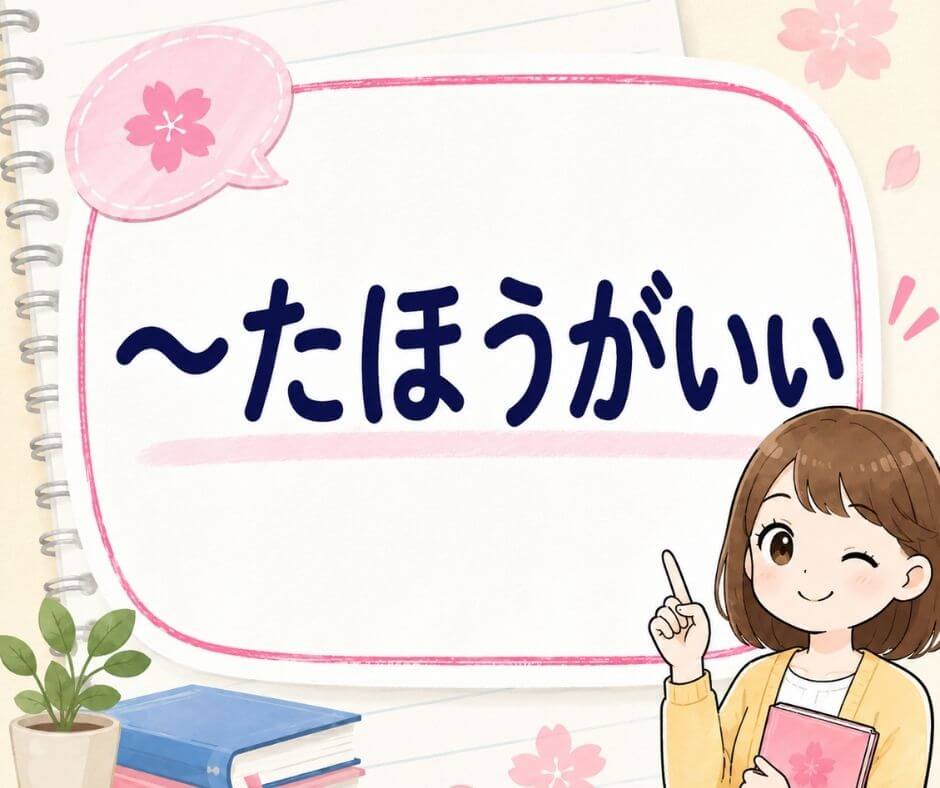
When you want to give advice in Japanese, two very useful expressions are 〜たほうがいい and 〜ないほうがいい.
They are commonly used to say:
- “You should do…”
- “You should not do…”
- “It would be better to…”
- “It would be better not to…”
Let’s learn how to form and use these expressions naturally.
What Does 〜たほうがいい Mean?
〜たほうがいい means “you should do something” or “it would be better to do something.”
It is used when you think an action is a good idea.
Sentence Structure
Verb in the past tense + ほうがいい
Although the verb is in the past tense, the sentence gives advice about the present or future.
Examples
早く寝たほうがいいです。
You should go to bed early.
もっと水を飲んだほうがいいです。
You should drink more water.
病院に行ったほうがいいです。
You should go to the hospital.
日本語を毎日練習したほうがいいです。
You should practice Japanese every day.
How to Make the Past Tense
To use 〜たほうがいい, change the verb into its casual past form.
| Dictionary Form | Past Form | Advice |
|---|---|---|
| 食べる | 食べた | 食べたほうがいい |
| 飲む | 飲んだ | 飲んだほうがいい |
| 行く | 行った | 行ったほうがいい |
| する | した | したほうがいい |
| 寝る | 寝た | 寝たほうがいい |
More Examples
朝ご飯を食べたほうがいいです。
You should eat breakfast.
電車で行ったほうがいいです。
You should go by train.
先生に聞いたほうがいいです。
You should ask the teacher.
What Does 〜ないほうがいい Mean?
〜ないほうがいい means “you should not do something” or “it would be better not to do something.”
It is used when you think an action is not a good idea.
Sentence Structure
Verb in the negative form + ほうがいい
Unlike 〜たほうがいい, you do not use the past negative form.
Examples
今日は出かけないほうがいいです。
You should not go out today.
夜にコーヒーを飲まないほうがいいです。
You should not drink coffee at night.
その食べ物は食べないほうがいいです。
You should not eat that food.
一人で行かないほうがいいです。
You should not go alone.
How to Make the Negative Form
Change the verb into its casual negative form.
| Dictionary Form | Negative Form | Advice |
| 食べる | 食べない | 食べないほうがいい |
| 飲む | 飲まない | 飲まないほうがいい |
| 行く | 行かない | 行かないほうがいい |
| する | しない | しないほうがいい |
| 寝る | 寝ない | 寝ないほうがいい |
More Examples
あまり心配しないほうがいいです。
You should not worry too much.
ここで写真を撮らないほうがいいです。
You should not take pictures here.
遅くまで起きていないほうがいいです。
You should not stay awake until late.
Comparing the Two Expressions
Let’s compare positive and negative advice.
薬を飲んだほうがいいです。
You should take some medicine.
お酒を飲まないほうがいいです。
You should not drink alcohol.
タクシーで行ったほうがいいです。
You should go by taxi.
歩いて行かないほうがいいです。
You should not walk there.
How Strong Is This Advice?
〜たほうがいい and 〜ないほうがいい can sound quite direct.
They are often used when:
- Someone asks for advice
- You are worried about someone
- There may be a problem or negative result
- You know the person well
For example:
A: 頭が痛いです。
I have a headache.
B: 今日は早く寝たほうがいいですよ。
You should go to bed early today.
The particle よ makes the advice sound more natural and caring.
Be Careful When Giving Advice
Giving advice to someone who did not ask for it can sometimes sound controlling.
For softer advice, you can add と思います.
早く寝たほうがいいと思います。
I think it would be better to go to bed early.
病院に行ったほうがいいと思います。
I think you should go to the hospital.
You can also use かもしれません to make your advice even softer.
少し休んだほうがいいかもしれません。
It might be better to rest a little.
How to Ask for Advice
You can also use this grammar to ask someone what you should do.
Question Structure
Question word + verb + ほうがいいですか
Examples
何を食べたほうがいいですか。
What should I eat?
何時に行ったほうがいいですか。
What time should I go?
どの電車に乗ったほうがいいですか。
Which train should I take?
ホテルを予約したほうがいいですか。
Should I book a hotel?
Common Mistakes
Mistake 1: Using the Dictionary Form
Incorrect:
早く寝るほうがいいです。
Correct:
早く寝たほうがいいです。
You should go to bed early.
For positive advice, use the past form before ほうがいい.
Mistake 2: Using the Past Negative Form
Incorrect:
食べなかったほうがいいです。
Correct:
食べないほうがいいです。
You should not eat it.
For negative advice, use the regular negative form.
Be careful: 食べなかったほうがいい can mean “It would have been better if you had not eaten it,” depending on the situation.
Mistake 3: Using This Expression for Every Suggestion
〜たほうがいい is stronger than a casual suggestion.
For a friendly invitation, use 〜ませんか instead.
一緒に映画を見ませんか。
Would you like to watch a movie together?
一緒に映画を見たほうがいいです。
You should watch a movie with me.
The second sentence sounds like advice, not an invitation.
Mini Dialogue
A: 最近、よく眠れません。
Recently, I cannot sleep well.
B: 夜にスマホを見ないほうがいいですよ。
You should not look at your phone at night.
A: そうですね。何時に寝たほうがいいですか。
That’s true. What time should I go to bed?
B: 11時ごろ寝たほうがいいと思います。
I think you should go to bed at around 11:00.
Practice
Complete each sentence with 〜たほうがいい or 〜ないほうがいい.
疲れていますから、少し____。
You are tired, so you should rest a little.
明日はテストですから、夜遅くまで____。
You have a test tomorrow, so you should not stay awake until late.
雨が降りますから、傘を____。
It will rain, so you should take an umbrella.
この道は危ないですから、一人で____。
This road is dangerous, so you should not go alone.
Answers
- 休んだほうがいいです
- 起きていないほうがいいです
- 持って行ったほうがいいです
- 行かないほうがいいです
Summary
Use 〜たほうがいい to recommend doing something.
Verb past form + ほうがいい
早く寝たほうがいいです。
You should go to bed early.
Use 〜ないほうがいい to recommend not doing something.
Verb negative form + ほうがいい
夜にコーヒーを飲まないほうがいいです。
You should not drink coffee at night.
These expressions are very useful, but they can sound direct. Using よ, と思います, or かもしれません can make your advice sound softer and more natural.
If you want to learn Japanese, improve your skills, or connect with native speakers and other learners, we can help. We offer one-on-one lessons and a supportive community!
Website: nihongonana.com
Email: support@nihongonana.com
✅Private Lesson: NihongoNana Private Lessons
✅Online Community: NihongoNana Community
Recent Posts
-

Visiting a Hospital in…
September 21, 2026
-

What Is Silver Week…
September 19, 2026
-

ところ vs 場所: How…
September 18, 2026
-

Discover Hokkaido in Japanese:…
September 17, 2026
-

How to Say “Heart”…
September 16, 2026
Leave Comment