
 August 8, 2026
 No Comments
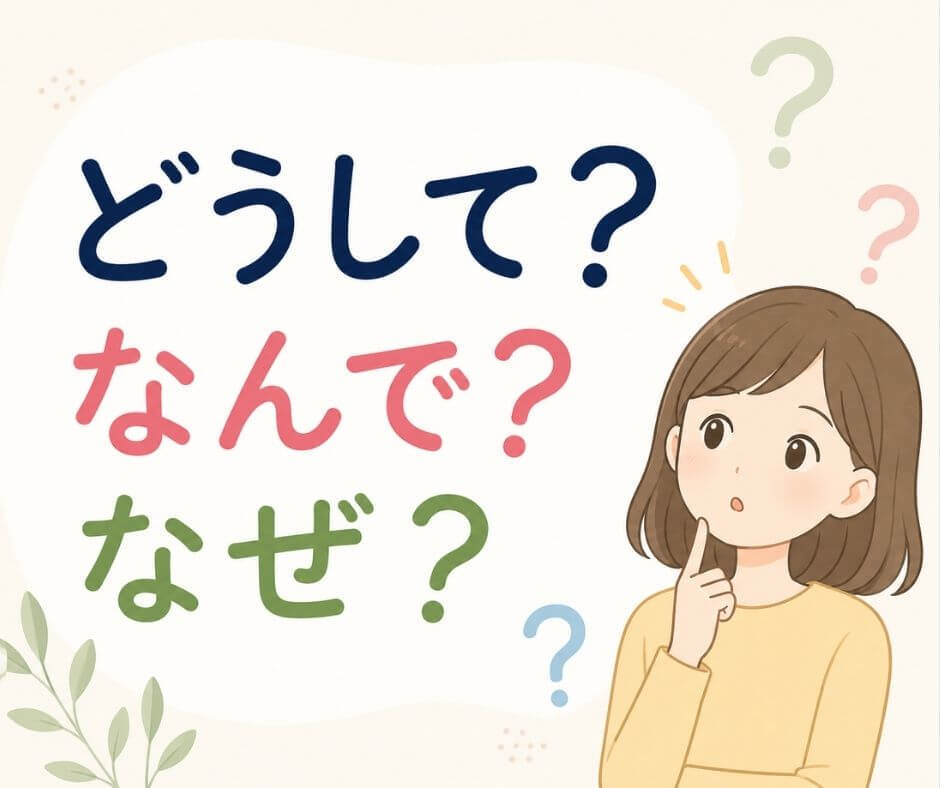
どうして vs なんで vs なぜ: What’s the Difference in Japanese?
Difference Between どうして, なんで, and なぜ in Japanese
If you have studied Japanese for a while, you have probably seen several words that mean “why”:
- どうして
- なんで
- なぜ
They all ask for a reason, so they can often be translated as “why” in English. However, Japanese speakers do not always use them in exactly the same situations.
The main difference is their tone and level of formality.
Let’s take a look at each one!
1. どうして — Why?
どうして is a very common and neutral way to ask “why?”
You can use it in both casual and polite conversations, so it is a useful word for Japanese learners to remember.
Examples
どうして日本語を勉強していますか。
Why are you studying Japanese?
どうして昨日来なかったんですか。
Why didn’t you come yesterday?
どうしてそんなにうれしいの?
Why are you so happy?
どうして can also show stronger feelings depending on your tone.
For example:
どうして!?
Why!?
どうしてそんなことを言ったの?
Why did you say something like that?
Here, the speaker may sound surprised, confused, upset, or emotional.
💡 Think of どうして as the safe, general-purpose “why.”
2. なんで — Casual “Why?”
なんで also means “why,” but it is usually more casual than どうして.
You will hear it very often in everyday conversations between friends, family members, classmates, and other people who are close.
Examples
なんで日本に来たの?
Why did you come to Japan?
なんで笑ってるの?
Why are you laughing?
なんで今日こんなに暑いの?
Why is it so hot today?
なんで!?
Why!?
なんで sounds very natural in casual spoken Japanese.
However, because it is casual, you should be careful when speaking to someone in a formal situation.
For example, instead of:
なんで遅れたんですか。
Why were you late?
you may want to use:
どうして遅れたんですか。
Why were you late?
The second one sounds a little softer and more appropriate in polite conversation.
💡 You will probably hear なんで a lot when Japanese people talk naturally with friends.
3. なぜ — Formal or Serious “Why?”
なぜ also means “why,” but it often sounds more formal, serious, or objective.
It is common in:
- News
- Articles
- Essays
- Presentations
- Research
- Formal explanations
- Serious questions
Examples
なぜ日本では桜が人気なのでしょうか。
Why are cherry blossoms popular in Japan?
なぜこの問題が起きたのでしょうか。
Why did this problem occur?
なぜ人は夢を見るのでしょうか。
Why do people dream?
Compared with なんで, these sentences sound more like someone is carefully investigating or explaining a reason.
You can use なぜ in conversation too, but in a very casual conversation it may sometimes sound slightly serious or dramatic.
For example:
なぜ来なかったの?
Why didn’t you come?
This is grammatically correct, but between close friends:
なんで来なかったの?
Why didn’t you come?
would usually sound more natural.
💡 Think of なぜ as the more formal or analytical “why.”
Quick Comparison
| Word | Meaning | Tone | Common Situation |
|---|---|---|---|
| どうして | Why | Neutral | Everyday conversation, polite conversation |
| なんで | Why | Casual | Friends, family, casual speech |
| なぜ | Why | Formal / serious | Writing, news, explanations, serious questions |
Compare These Three Sentences
Let’s imagine that your friend suddenly decides to move to Tokyo.
You could ask:
どうして東京に引っ越すの?
Why are you moving to Tokyo?
This sounds neutral and natural. You simply want to know the reason.
なんで東京に引っ越すの?
Why are you moving to Tokyo?
This sounds casual and conversational. It is very natural between friends.
なぜ東京に引っ越すの?
Why are you moving to Tokyo?
This is correct, but it sounds more serious or formal. Depending on your tone, it might sound like you are asking for a detailed explanation.
The basic meaning is almost the same, but the feeling is slightly different.
Can You Always Replace Them?
Not always.
In many everyday sentences, どうして and なんで can easily replace each other.
For example:
どうして日本語を勉強しているの?
Why are you studying Japanese?
なんで日本語を勉強しているの?
Why are you studying Japanese?
Both mean the same thing, but the second sentence sounds more casual.
なぜ is also grammatically possible:
なぜ日本語を勉強しているの?
Why are you studying Japanese?
However, it sounds a little more serious or intentional.
Maybe you are interviewing someone or asking them to explain their motivation in detail.
Be Careful: なんで Has Another Meaning
There is one important thing to remember about なんで.
なんで can mean “why,” but 何(なに)で can also mean “by what means” or “using what.”
For example:
何で学校に行きますか。
How do you go to school?
The answer might be:
電車で行きます。
I go by train.
This is one reason why context is important.
When なんで clearly asks about a reason, it means “why.”
なんで日本語を勉強しているの?
Why are you studying Japanese?
Which One Should You Use?
For beginners, you can remember it like this:
🟢 どうして → Neutral and safe
Use this when you are not sure which one to choose.
🗣️ なんで → Casual and natural
Use this when talking with friends or in relaxed conversations.
📝 なぜ → Formal and serious
You will often see this in writing, news, presentations, or analytical questions.
You do not need to worry too much about choosing the “perfect” one. In many situations, Japanese speakers will understand you whichever one you use.
The biggest difference is not the basic meaning — it is how the question feels.
Final Summary
どうして, なんで, and なぜ can all mean “why,” but they have slightly different tones.
どうして is neutral and works in many situations.
なんで is casual and very common in everyday speech.
なぜ sounds more formal, serious, or analytical.
If you are a beginner and are not sure which one to use, どうして is usually the safest choice.
As you listen to more natural Japanese conversations, you will probably notice なんで appearing everywhere too!
Try listening carefully the next time you watch a Japanese drama, anime, or YouTube video. Can you hear which version of “why” the speaker chooses?
If you want to learn Japanese, improve your skills, or connect with native speakers and other learners, we can help. We offer one-on-one lessons and a supportive community!
Website: nihongonana.com
Email: support@nihongonana.com
✅Private Lesson: NihongoNana Private Lessons
✅Online Community: NihongoNana Community
Recent Posts
-

Visiting a Hospital in…
September 21, 2026
-

What Is Silver Week…
September 19, 2026
-

ところ vs 場所: How…
September 18, 2026
-

Discover Hokkaido in Japanese:…
September 17, 2026
-

How to Say “Heart”…
September 16, 2026
Leave Comment